How to Prepare for an Ayahuasca Ceremony
Are you feeling called to meet with Ayahuasca? Whether you’re planning a plant medicine retreat, already signed up for a ceremony, or simply exploring the possibility, it is important to know how to prepare your mind, body, and energy for this transformative experience. Proper preparation honors Ayahuasca with reverence as a powerful master plant and helps you build a conscious, respectful relationship with the medicine.
Ayahuasca, a sacred plant medicine from the Amazon, has guided people for centuries through healing, self-discovery, and inner growth. Many describe the experience as a dialogue with the inner self – a chance to see one’s life, patterns, and emotions from a more honest and spacious perspective. When you tend to your body, mind, and energy in advance, you arrive in ceremony as an active participant in this process.
Preparing for this experience isn’t about trying to control the journey or shape what will happen. It’s about cultivating a foundation of clarity and trust, tending to your inner landscape so you can move through the experience with more openness and ease. When you take time to reflect, to listen inward, and to settle your energy, you create conditions that support a more aligned and receptive journey.
Whether this will be your first Ayahuasca experience or you’re returning to the medicine, this guide can help you prepare for the journey ahead. Read on to learn more about how to prepare for an Ayahuasca ceremony.
Choose Your Ayahuasca Shaman
Selecting the right guide is one of the most important aspects of Ayahuasca preparation. Your medicine guide holds both the energetic and physical space for ceremony. When looking for a guide, focus on these key elements:
- Background and training
- Experience guiding ceremonies
- Connection and trust
- Support before and after the ceremony
- Feedback from past participants
A shaman’s background and training reflect the tradition they follow and the depth of their practice. You can ask about their experience guiding ceremonies, as skilled guides can support participants through Ayahuasca experiences with care and presence. An additional consideration is whether the shaman prepares their own medicine, which can reflect their understanding of the plant, respect for the process, and personal connection to the work.
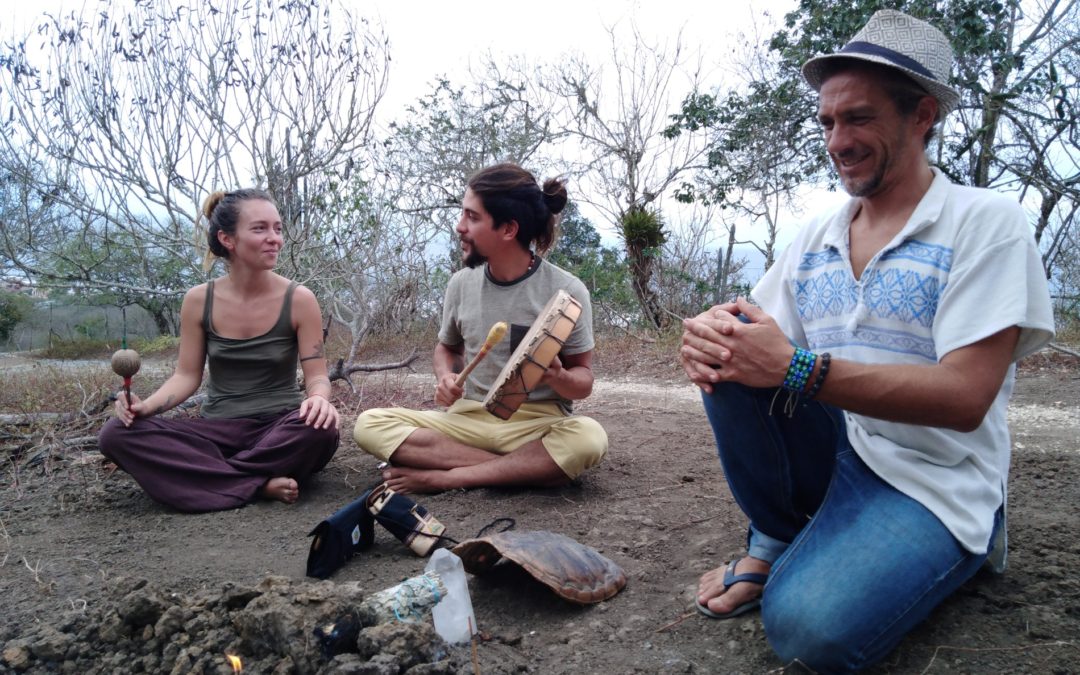
For example, we prepare Ayahuasca medicine here at Ayllu Medicina and have a connection with a family in the jungle that harvests it in Ecuador. You can read about our guides, Aime and Hwaneetah, here.
Feeling a genuine connection and trust with your guide allows you to fully open to the medicine, while their support before and after the ceremony helps you prepare, set intentions, and integrate insights afterward. Try to meet them before the Ayahuasca ceremony begins, or familiarize yourself with their work by listening to their music or learning about their experience.
Feedback from past participants can also provide a valuable perspective, offering insight into the medicine guide’s style and ability to hold a safe, sacred space for healing.
Ceremony Logistics and Location
Where is the Ayahuasca ceremony held? Along with knowing the Ayahuasca medicine guide, familiarize yourself with the ceremony location. Understanding both logistics and the environment helps you enter the experience feeling secure, informed, and able to focus on the medicine.
Consider:
- Group sizes and facilitator ratio
- Organization reviews
- Accommodation and/or transport options
- Participant screening and protocols
- Ceremony set-up
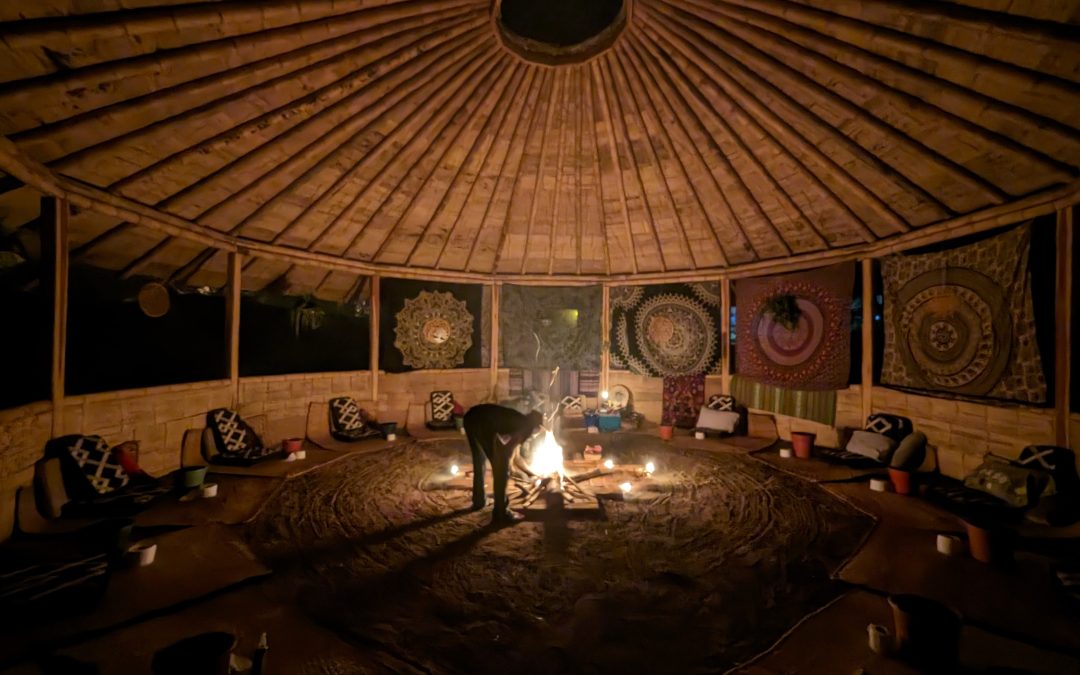
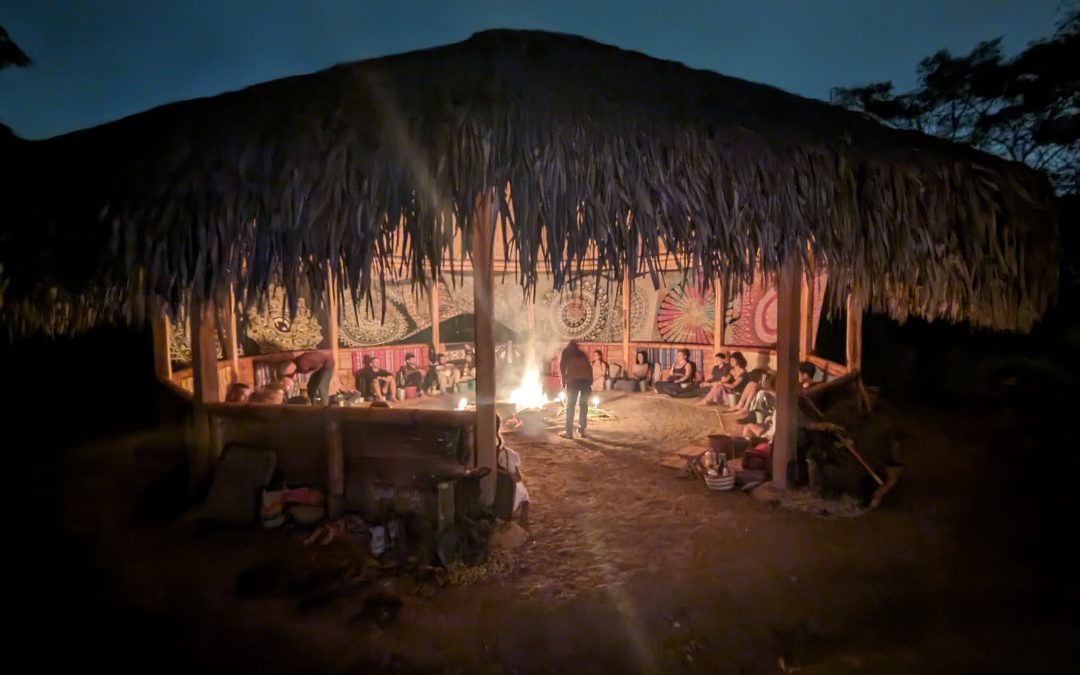
Talk to the facilitators about the ceremony space and read participant reviews. Learn specifics about where you will receive the medicine. For example, at our medicine retreats, we limit attendance to 12-15 people to ensure personal space and support. We provide cushions, blankets, and other comforts, and hold ceremonies in a quiet setting in nature near the beach, with comfortable accommodation options.
By choosing a space with careful attention to group dynamics, safety, and environment, you can focus fully on the medicine and the inner work it facilitates.
Participant Screening
Before attending an Ayahuasca ceremony, you should be asked about your health, medications, and any prior experience with plant medicine. Certain medications must be avoided, and safety guidelines need to be followed to ensure a safe and supportive environment. Being open about your current health allows the ceremony team to provide proper support, help you prepare effectively, and ensure the safety of all participants.
If you are unsure, speak to your doctor and the facilitators in advance. Some Ayahuasca contraindications require careful tapering over several months before attending a plant medicine retreat or ceremony.
The Role of Intention
Before the ceremony, reflect on why you’re doing this. Do you have an intention for your Ayahuasca ceremony?
Many participants ask how to set intentions for a plant medicine ceremony. A helpful approach is to write down your questions, intentions, or what you hope to release or receive. You should also share your intention or questions with your facilitators and guides. They can use this understanding to guide and support you both during your preparation and throughout the ceremony itself.
Your intention may evolve, or simplify, over the course of the ceremony, and that’s perfectly normal. This reflection time is not about pressuring yourself to come up with the “perfect” intention or creating a long checklist of insights to achieve.
Instead, it’s an opportunity to become mindful of why you are attending the ceremony and to prepare your mind, body, and energy well for what is ahead. Instead, it’s an opportunity to become mindful of why you are attending the ceremony. A good place to start is simple, such as gratitude, which is a grounded foundation for plant medicine experiences. Trust that the medicine will also know what to show you.
Slow Down Before Ayahuasca
In the days before your Ayahuasca ceremony, begin simplifying your routine and slowing down. Reduce distractions, turn off your phone, and create a quiet space for reflection. Spend time in nature, walk, meditate, or read a thoughtful book to gently prepare your mind.
Remember that during the ceremony, experiences often come in layers, so giving yourself space beforehand helps you process insights more clearly. Slowing down allows you to simplify, create space, and release mental clutter, so you can approach the ceremony fully present and open to the medicine’s guidance.
Take The Ayahuasca Dieta Seriously
Going to an Ayahuasca ceremony is not a tourist attraction or a fun trip, it is medicine, and should be taken seriously.
Each plant medicine retreat has its own guidelines, but most recommend avoiding processed foods, heavy spices, alcohol, drugs, certain medications, and sexual activity for a period before and after ceremonies. This is not only a cultural tradition but also an energetic and physical preparation.
The dieta helps clear your system, regulate your emotions, and make space for you to align with the medicine’s frequency. We share our Ayahuasca diet guidelines once you sign up for a retreat or ceremony.
What to Wear For An Ayahuasca Ceremony
What you wear to an Ayahuasca ceremony is more meaningful than simple comfort. Wearing nice, intentional clothing becomes part of preparing yourself energetically, and it is often said that you are dressing for your ancestors. Dressing with this in mind can be a nice way to honor them and acknowledge the sacredness of the space you’re entering.
We recommend that women wear a comfortable dress or skirt, which offers an extra circle of protection between you and the earth. It is okay to wear comfortable trousers if you do not wear dresses. Men can wear a loose-fitting shirt, a smart t-shirt, and trousers or shorts.
Try the outfit before arriving at the ceremony. You do not want physical irritation to distract you from the inward journey. If you have long hair, you can braid it for additional grounding.
Some people like to stick to light colors or natural fibers and wear a faja, which is a protection belt. Remember that temperatures can fluctuate during the ceremony, so layers can be helpful.
Have a Grounding Object or Affirmation
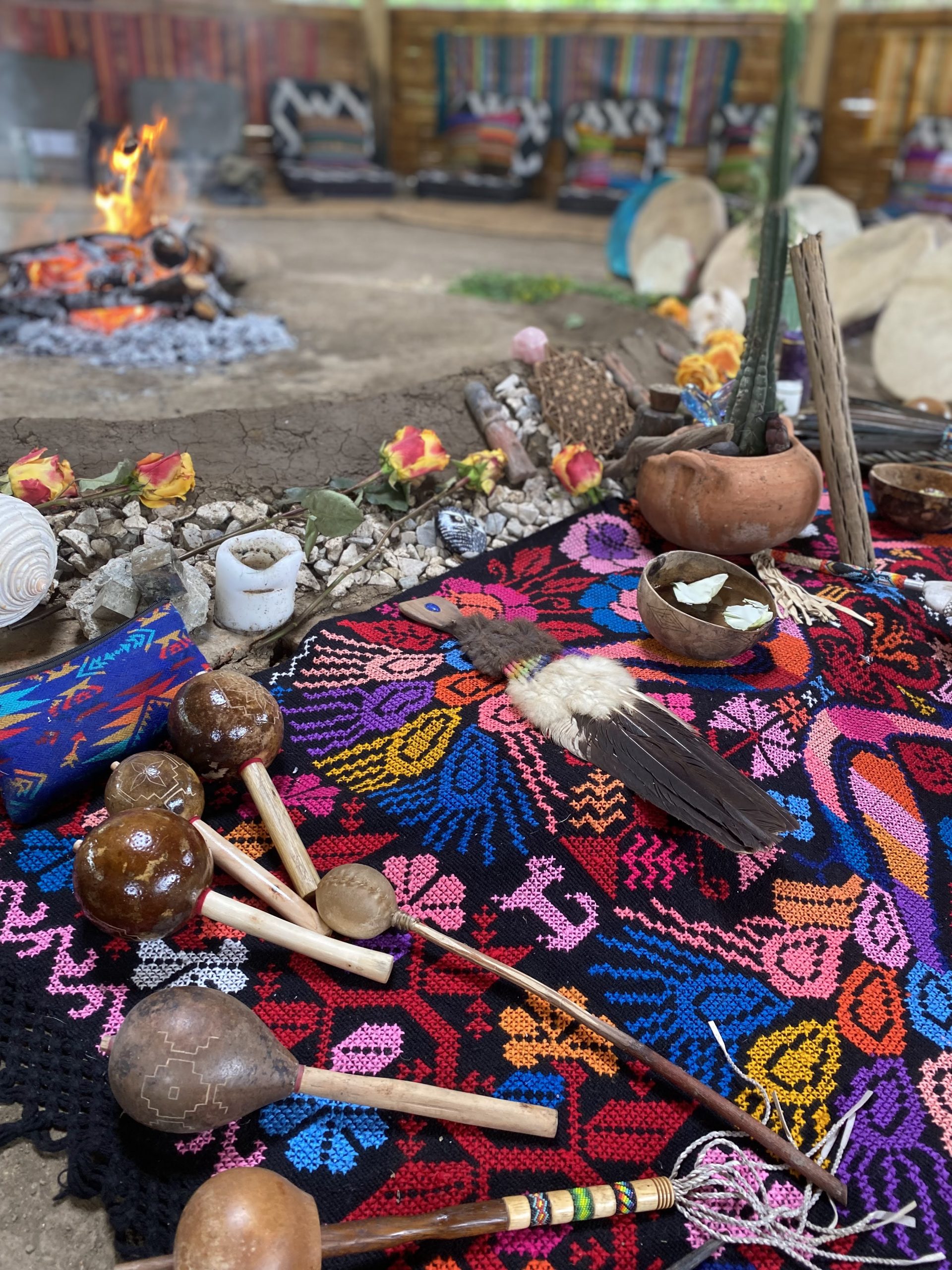
Some people find it helpful to have a small crystal or another object to keep with them for grounding during the ceremony. Others like to have an affirmation to return to when they remember, such as a meditation technique or even a simple ‘thank you’ to repeat silently. Gratitude is always a powerful tool to recenter.
Expect Nothing, Prepare for Everything!
While it can be helpful to hear about other people’s experiences, it’s important to remember that there are two key ingredients: you and the medicine. This is why every journey can be different, and even multiple Ayahuasca ceremonies for the same person can vary, as we are constantly changing and evolving.
Ayahuasca works in mysterious ways. Entering with expectations can create resistance between the Ayahuasca expectations vs. the reality. Instead, arrive open and willing. Your experience may be gentle or intense, quiet or visionary.
Preparation is not about predicting the journey. It’s about strengthening your ability to navigate whatever arises. So step away from the Ayahuasca forums, hit pause on the documentaries, and spend a few days turning inward before your ceremony.
Navigating the Ayahuasca Ceremony
If You Need, Ask for Help
You do not have to navigate the experience alone. The medicine guides and facilitators are there to support you. Asking for guidance, whether for reassurance, practical help, or emotional support, is a sign of strength, not weakness. This is the case before the ceremony and during the ceremony.
Don’t Resist Purging
It is common to purge in Ayahuasca ceremonies, due to the response of the body to the plant and all the cleansing this medicine offers. Purging with Ayahuasca can take many forms, including vomiting, tears, shaking, yawning, or going to the bathroom.
It is a natural part of the process for many people, and many traditions view it as a cleansing of emotional or energetic blockages. So, take a deep breath and release: do not resist it.
Leaning into Discomfort: Honoring the Medicine of Ayahuasca
Ayahuasca may bring up buried emotions, fears, or old stories. If discomfort arises, return to your breath, your intention, or an affirmation. Discomfort is not punishment; it is often an invitation into deeper healing. When we fight what arises, tension grows. Discomfort becomes suffering only when we resist it.
By surrendering, softening, and allowing, the experience becomes more manageable and meaningful. Remember, any intensity will pass. Your role is simply to stay present, breathe through it, and let the medicine guide you.
Approach the medicine with reverence and humility. Ayahuasca is not something to test or challenge; she is a teacher and a guide. In many traditions, Ayahuasca is called “she,” honoring her as a grandmother, as she is wise, patient, and deeply nurturing, offering insight and care as you navigate your inner world. You can speak to her directly, asking for guidance, clarity, or gentleness, but always from a place of respect. A simple, sincere request such as “Please guide me gently” or “Help me see what I need” honors her intelligence and opens space for cooperation rather than resistance.
Trust your resilience and the process. Leaning into discomfort with humility, rather than fighting or questioning the medicine, allows insights and healing to emerge naturally.
Post- Ayahuasca Integration
Have Your Journal Ready
It is natural not to remember everything that happens in an Ayahuasca ceremony. The medicine works on many layers of our being—physical, emotional, energetic—so we are not always fully aware of the healing taking place. Much of the work occurs beneath the surface, in places the mind cannot easily translate into words or images.
After the ceremony, it can be helpful to write down any sensations, visions, emotions, or insights that surface. Even if the details feel fragmented or dreamlike, capturing them allows you to weave meaning over time. Some moments may feel crystal clear right away, while others will unfold slowly over days, weeks, or even months.
Journaling becomes a bridge between the ceremony space and daily life. It supports integration, helps you remember subtle teachings, and gives your future self something to reflect on as the lessons continue to reveal themselves. Having a journal nearby immediately after the ceremony ensures you can note the experience while it’s still fresh, even if the full understanding comes later.
Preparing for After the Ayahuasca Journey
Preparing for Ayahuasca also means considering your plant medicine integration time. After a ceremony, it’s normal to feel emotionally sensitive or more energetically open for several days. This heightened awareness is part of the integration process, and it’s important to give yourself time, space, and gentle care. Daily practices like journaling insights, meditating, walking in nature, or simply resting can help ground the medicine’s lessons into your everyday life.
Limiting overstimulation, such as screen time, busy environments, or loud social settings, supports your nervous system as it recalibrates. Nourishing foods, hydration, and light movement, such as yoga or gentle walks, can further support physical and emotional balance. So, if you can, plan to go slow for a few days.
Integration often continues in layers over weeks or months. Insights may resurface gradually. Check if the Ayahuasca ceremony includes integration support. Reflecting on insights through writing, meditation, or sharing circles with the ceremony group and medicine guides can help deepen understanding. It also helps ensure the medicine’s teachings are fully absorbed into your life. At our Ayllu Medicina retreats, we include sharing circles and post-integration support.
The Power of Surrender: Letting Go
One of the most universal teachings across plant medicine traditions is surrender. It is a word often used, but what does it actually mean beyond sounding like a self-help buzzword?
Surrender is about:
- Letting go of control
- Releasing expectations
- Allowing the experience to unfold
- Trusting the medicine and yourself
In the days leading up to your ceremony, you can begin practicing surrender by cultivating stillness and becoming the observer of your own mind.
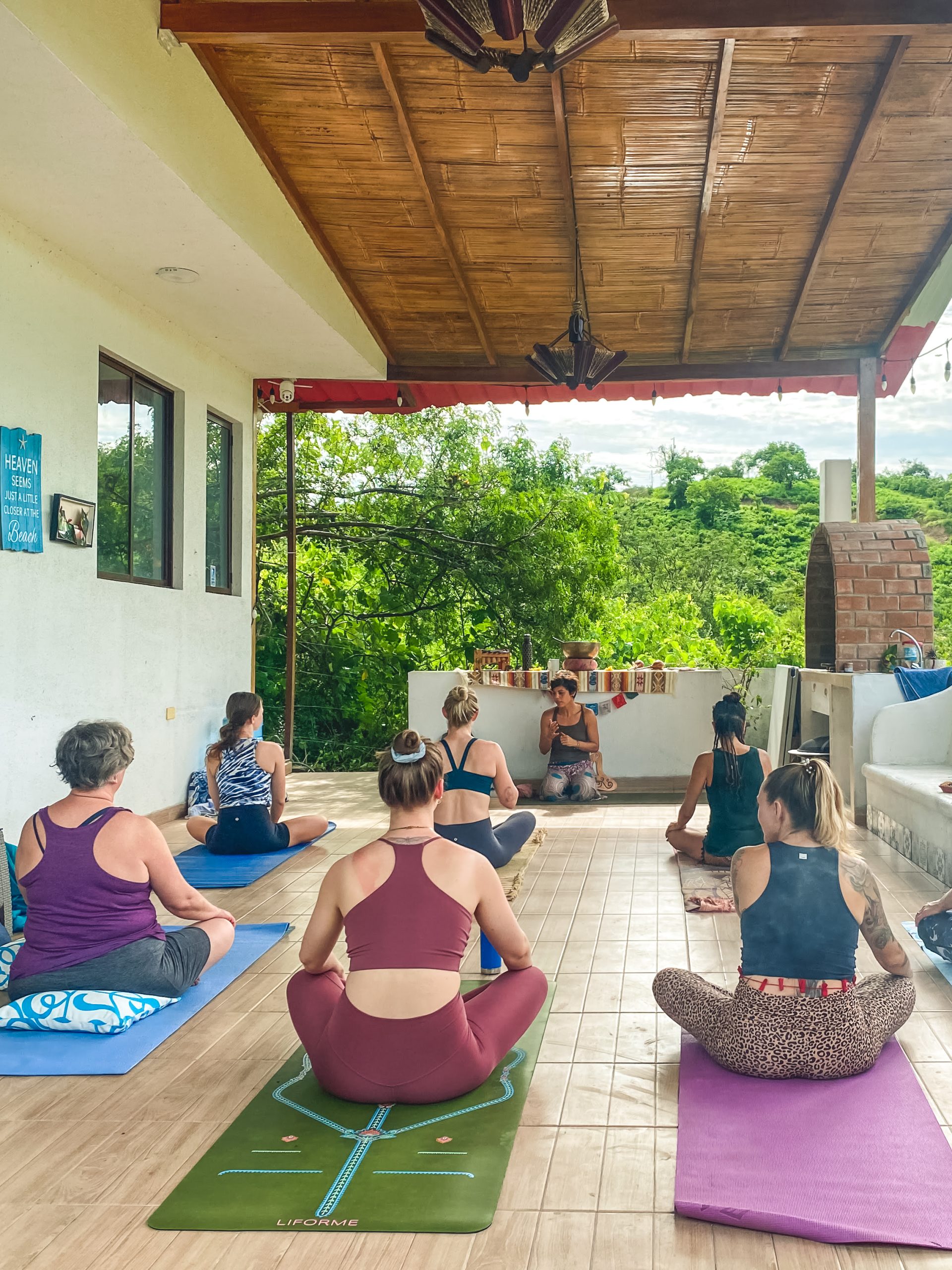
Meditation, quiet reflection, or simply sitting in nature helps you notice thoughts and emotions without attachment. This practice strengthens your ability to witness your inner experiences, connecting you to your core essence before you drink the medicine, a practice that serves well not only in an Ayahuasca ceremony, but also in your everyday life.
Also, many people find that the journey with Ayahuasca begins the moment they feel “called” to the medicine. From that point on, reflections, dreams, and subtle shifts may already be preparing the ground, which awareness can illuminate.
How to Prepare for An Ayahuasca Ceremony
Ayahuasca often reveals what you truly need, not what you expect. Preparing your body, mind, and energy through reflection and awareness creates a smoother, more open experience, allowing the medicine to guide you more fully and deeply.
Knowing how to prepare for an Ayahuasca ceremony doesn’t shape the journey or control it, but it does help you move through it with greater trust. Preparation provides something to lean on when things feel intense, and something to open into when the experience becomes expansive. Instead of standing on the outside looking in, you become fully involved in your own process, in dialogue with the plant medicine.
Are you ready to meet the medicine of Ayahuasca? Join us this retreat season at Ayllu Medicina. All of our plant medicine retreats include one or two Ayahuasca ceremonies, thoughtful preparation, and post-ceremony integration support. Our next available retreat is in February 2026. Contact us for more information.