by Emma Reeves | Oct 10, 2026 | spiritual practices
Our relationship with nature is one of giving and receiving. The Earth provides the conditions that sustain life, from the water we drink and the food we eat to the air we breathe and the places where we find rest. Yet in the pace of modern life, it can be easy to forget that we are part of this relationship, rather than separate from it.
In Andean traditions, the concept of ayni offers a way of understanding this connection. Often translated as reciprocity and sacred balance, ayni describes a relationship of mutual giving, receiving, and responsibility. It reminds us that life is sustained through our relationships with the land, our communities, and one another.
Ayni invites us to consider not only what we receive, but also what we offer in return. As the new moon marks the beginning of another lunar cycle, we have an opportunity to pause and reflect on these relationships. Read on to learn more.
What Is Ayni?
Ayni is an important principle in many Andean Indigenous communities, where reciprocity has traditionally shaped relationships between people, communities, and the natural world.
Rather than understanding life as a series of individual exchanges, ayni reflects an ongoing relationship of mutual support and responsibility. Giving and receiving are connected, and the well-being of one is understood in relation to the well-being of others.
In community life, reciprocity can be expressed through shared work, helping neighbours, exchanging knowledge, and contributing to collective responsibilities. These relationships are built over time, through participation and a recognition that people depend on one another.
The principle also invites reflection on our relationship with the land. Nature is not simply a resource to be used. It is the living environment that sustains us, and our actions have consequences for the places we inhabit.
Although the meaning and practice of ayni can vary across Andean communities, its emphasis on reciprocal relationships offers an important perspective on how we live with greater awareness of our connections and responsibilities. It can prompt us to ask questions such as:
How are we caring for the places that sustain us? What are we contributing to our communities? And how might we bring greater balance into the way we live?
Reciprocity with Nature: Moving Beyond Taking
It is easy to think of nature in terms of what it provides. We gather food, use water, build homes, and seek the comfort of natural spaces. These are essential parts of life, but reciprocity asks us to consider the other side of the relationship. What do we give back?
This question does not require a grand gesture. It can begin with how we treat the places around us, the resources we use, and the living things that share our environment. Practising reciprocity with nature might mean caring for a garden, reducing unnecessary consumption, supporting local environmental initiatives, or learning more about the plants and ecosystems that surround us.
It can also mean changing the quality of our attention. When we spend time outdoors without distraction, we may begin to notice seasonal changes, the interdependence of different species, and the many processes that sustain life without our involvement. This awareness can influence the choices we make when we return to our everyday routines, allowing us to find a more balanced way of living.
Our relationship with nature is also connected to the way we relate to ourselves and others. Taking time to reflect on our habits, priorities, and relationships can help us recognise where we receive support and where we have opportunities to contribute. In this way, personal awareness and collective responsibility are closely connected.
Reciprocity is not only about expressing gratitude for nature. It is about allowing that gratitude to shape our actions and recognising our place within the relationships that sustain life.
So, reciprocity is not only about expressing gratitude for nature, it is about allowing that gratitude to shape our actions.
How to Practise Ayni in Everyday Life
Ayni becomes meaningful through the ways we participate in our relationships. Rather than remaining an abstract idea, it can guide small, practical choices in daily life. Here are four ways to begin exploring reciprocity in your own life.
1. Become More Conscious of What You Receive
Take time to notice what supports you throughout the day. Consider the food on your table, the water you use, the people who contribute to your well-being, and the natural environments that offer space to rest and recover.
The purpose is not simply to make a list of things to be grateful for, but to recognise the relationships that sustain our lives. Water, for example, is more than a resource we depend on. It is essential to life, nourishing our bodies, sustaining ecosystems, and carrying life through the earth.
We receive water’s care in countless ways, often without noticing. Reciprocity invites us to honour this relationship by caring for water in return, protecting its sources, using it with awareness, and recognising that its well-being is inseparable from our own.
2. Offer Something in Return
Once you become more aware of what you receive, consider how you might contribute in return. This could mean helping someone in your community, sharing your skills, supporting a local environmental project, or making more thoughtful choices about the resources you use. It can also mean doing an offering to the earth.
The contribution does not need to be equal or immediate. Reciprocity is not necessarily a transaction in which every act of giving must be repaid. It is an ongoing commitment to participating in relationships with care and responsibility.
3. Spend Time in Direct Relationship with Nature
Make time to experience the natural world beyond its practical uses. Walk through a forest, sit beside a river, plant seeds and care for plants, or spend a few quiet moments outside. Notice what is happening around you without feeling the need to name, photograph, or explain everything.
You might ask yourself what it means to be part of this environment and what responsibilities come with that relationship. Over time, these moments of attention can encourage a deeper understanding of the connection between personal well-being and the health of the places we inhabit.
4. Bring Reciprocity into Your Relationships
Ayni also invites us to consider how we give and receive within our relationships with other people. Consider these questions:
- Do we allow ourselves to receive support, or do we feel that we must manage everything alone?
- Do we offer our time and attention without expecting an immediate return?
- Are our relationships built around mutual respect and shared responsibility?
These questions can help us recognise where our relationships feel balanced and where greater awareness may be needed. Reciprocity does not mean giving without limits or ignoring our own needs. Healthy relationships also require boundaries, honesty, and respect for what each person can offer.
The New Moon: A Time for Reflection and Intention
The New Moon is often associated with beginnings, meaning it can be a good moment to pause and consider what we wish to cultivate in the cycle ahead.
The New Moon offers an opportunity to make space for that reflection. Through the principle of ayni, this moment can also become an invitation to look beyond personal intentions and consider our relationships with the wider world. Instead of asking only what we want to receive in the coming month, we might also ask what we are willing to contribute.
We can also reflect on all the ways we have been supported in the past month – including by the nature around us. These reflections can help connect intention with responsibility. As the next lunar cycle begins, take a moment to ask yourself: What have I received? What can I offer? And what is one practical way I can bring greater reciprocity into my relationship with nature?
A Simple New Moon Ritual for Reciprocity
You do not need an elaborate ceremony to create space for reflection. A few quiet moments can be enough to consider the relationship between what you receive and what you offer.
On New Moon, you can find a quiet space, if possible in nature. Reflect on the past 28 days. Recap the people, experiences, opportunities, and natural environments that have contributed to your life.
Reflect on one intention you can plant or nourish this month that connects your personal life with a wider sense of responsibility.
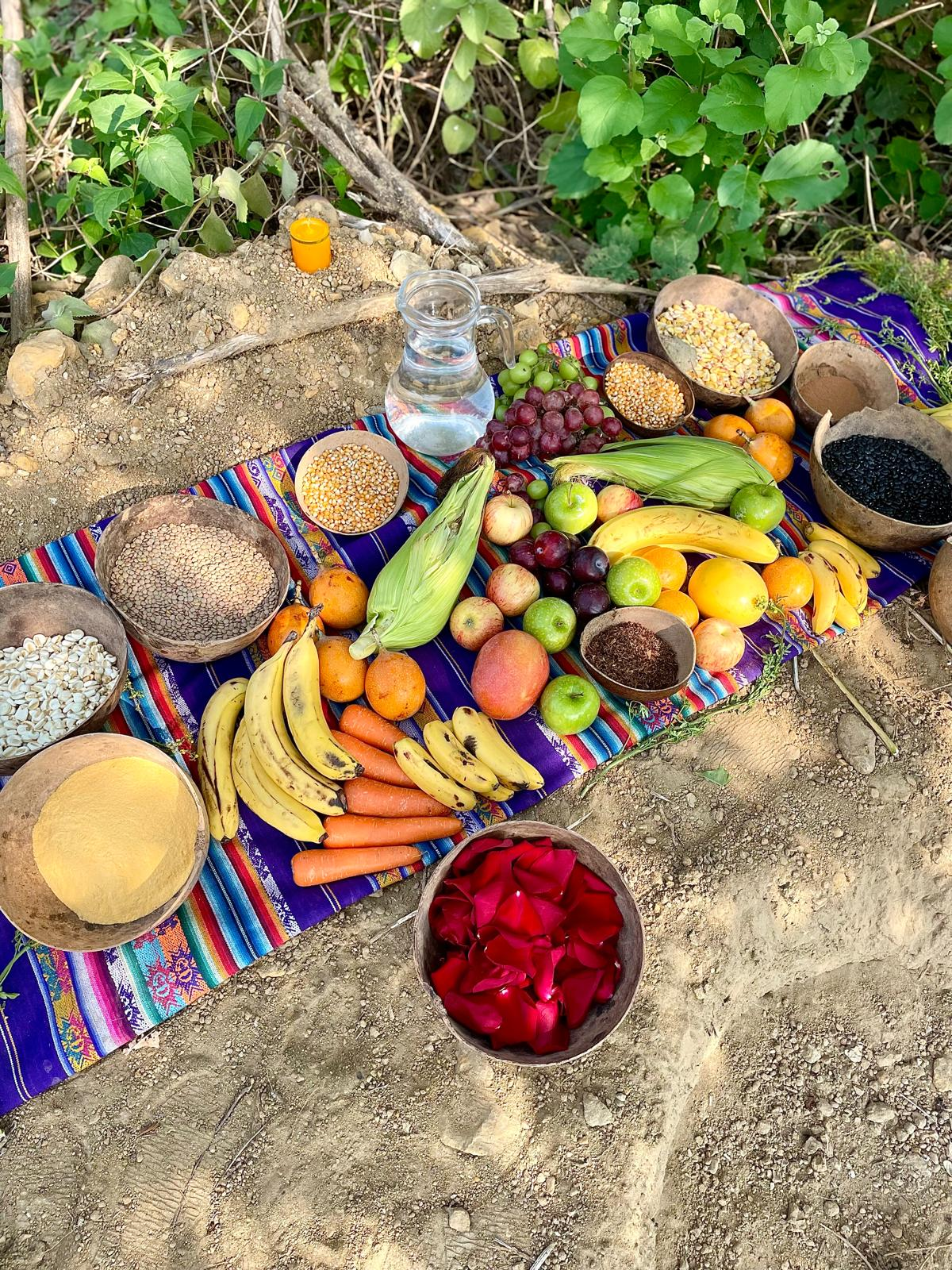
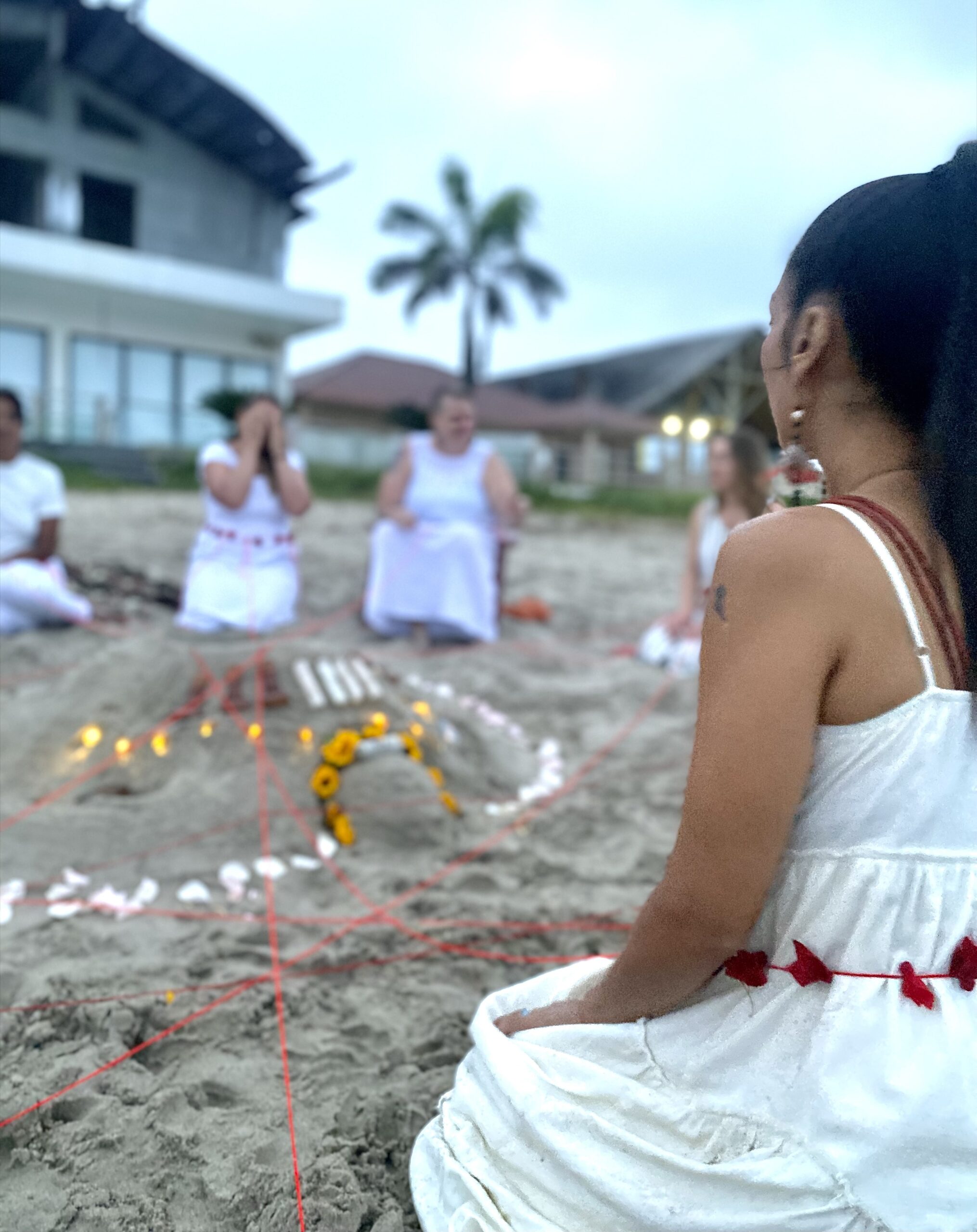
For example: This month, I will make more time to care for the natural spaces around me. Let the intention be specific enough to guide your actions, but also unfold in its own way. You can also do an offering to the Earth, with grains, fruits, stones or crystals, which have supported you during the past 28 days. While doing the offering, you can also sing a song or raise a prayer for what has passed and what is to come.
Return to your intention throughout the lunar cycle and notice what you learn from putting it into practice.
Returning to Reciprocity: Join Us at Ayllu Medicina
Ayni reminds us that life is shaped by relationships. We receive and are supported by the Earth, our communities, and from the people who accompany us along the way. We also have opportunities to contribute through our actions, attention, and care.
At Ayllu Medicina retreats, on the coast of Ecuador, time in nature is part of the opportunity to step away from familiar routines and experience a different pace of life.
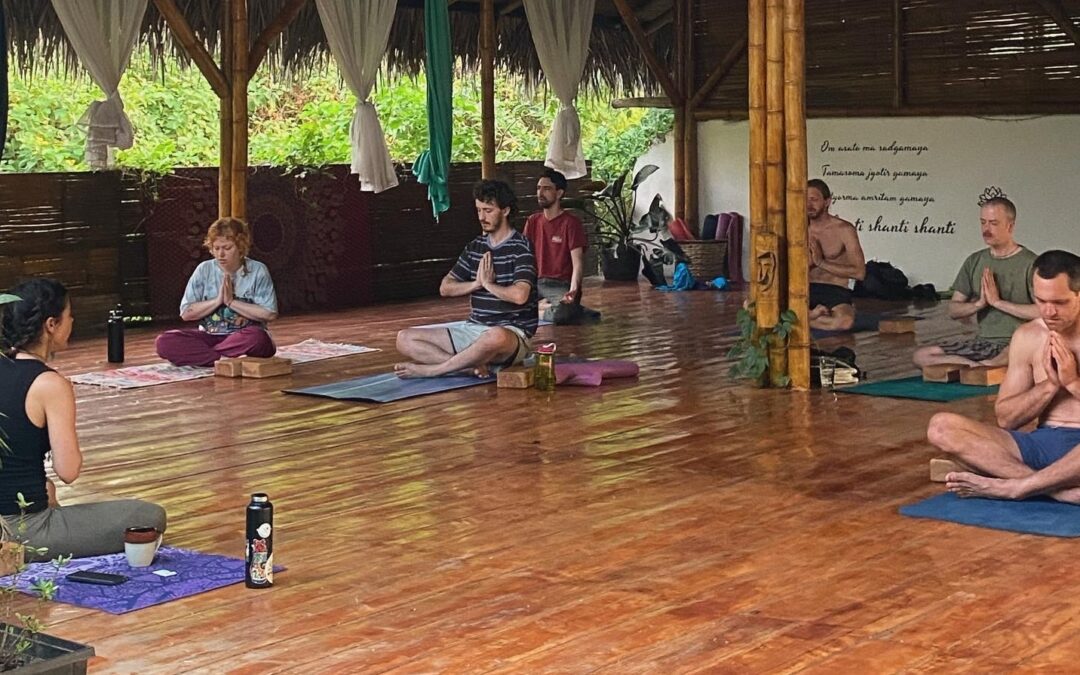
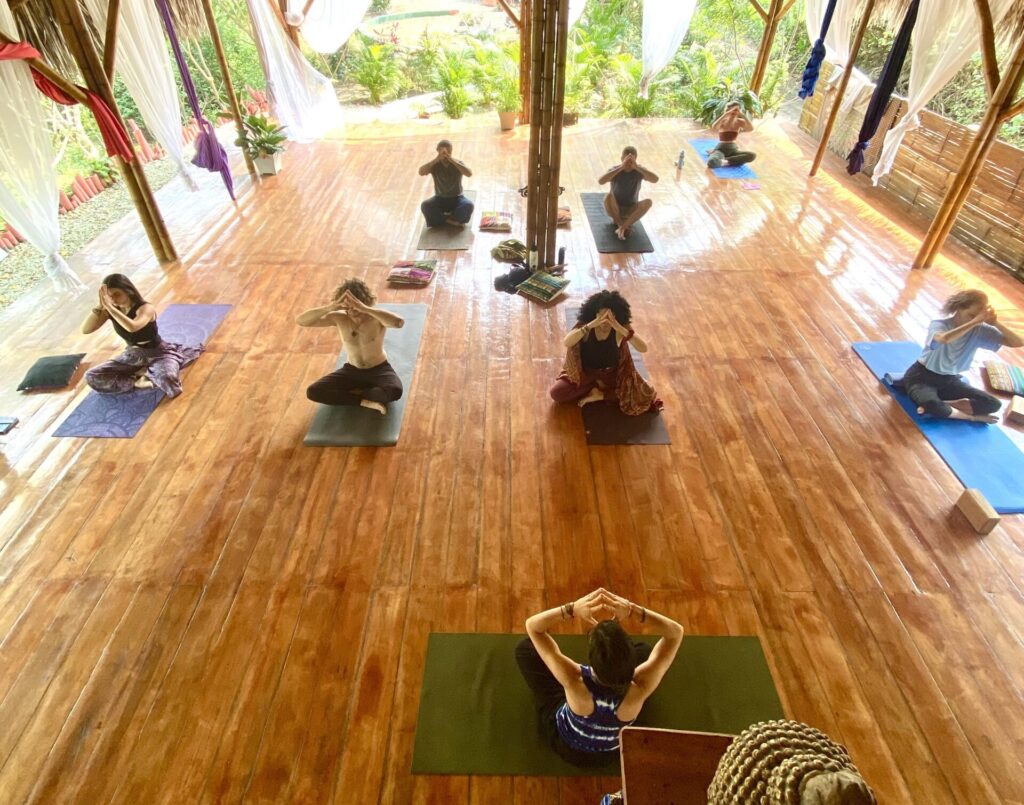
Through our retreat experiences, practices such as meditation, yoga, breathwork, and time connecting with the elements in an intentional way, offer opportunities to observe the body, mind, and surrounding environment with greater attention. Our plant medicine retreats also honor ancient traditions and practices, approached within the wider context of preparation, reflection, and integration.
If you feel called to explore these practices more deeply, take a week at Ayllu Medicina on the Ecuadorian coast to turn your attention inward, reconnect with nature, and explore how to bring greater balance between your inner world and the world around you. Discover our retreats, connect with the elements, and make space to deepen your relationship with yourself and the natural world.
by Emma Reeves | Sep 10, 2026 | spiritual practices
We tend to think of clutter as something physical. A cupboard becomes overcrowded, our desk fills with things we no longer use, or our home slowly accumulates objects that once had a purpose but no longer do. Did you know our inner world can become cluttered in the same way?
We accumulate experiences, conversations, disappointments, expectations, responsibilities and old ways of seeing ourselves. Some of these are still relevant, while others belong to a different period of our lives. Without taking time to review and release them, they can continue taking up attention even when the circumstances themselves have already changed.
There is a natural rhythm to life that is constantly reminding us that things change. The seasons move from one to another, the moon passes through its phases and the body moves through its own cycles. Yet our lives do not always give us the time or space to acknowledge these changes. We can move from one experience to the next without stopping to recognize that something has actually ended.
This is one reason closing cycles matters. It is not about constantly analyzing the past or turning every ending into a significant event. It is about periodically looking at what we are carrying, recognizing what has completed itself and allowing ourselves to put down what no longer needs to come with us. With Equinox on the horizon, it is the perfect time to look at what is out of balance in your life before this cycle closure.
Meditation offers a simple way to do this because it brings us back to the present. When we sit quietly, we begin to notice just how much of our attention is somewhere else. We replay what happened yesterday, anticipate what might happen tomorrow or return to situations that happened years ago. Through meditation, we practice noticing this movement and gently returning to what is happening now.
Read on to learn more about the importance of closing cycles and how meditation can help.
Staying Present When Our Attention Is Elsewhere
We can be physically present while our minds are somewhere completely different. We may be having breakfast while thinking about yesterday’s conversation, walking through nature while planning next week’s responsibilities or spending time with someone we love while replaying something that happened years ago.
Meditation makes this movement easier to notice. When we sit quietly and bring our attention to the breath, the mind inevitably wanders. We remember, plan, judge and imagine. The practice is not to prevent this from happening but to recognize it and gently return.
With time, this becomes more than a meditation technique. We begin to notice when our attention has become caught in an old story or when we are giving something from the past more attention than the present actually requires. This awareness is an important part of closing cycles because we cannot let go of what we have not noticed we are carrying.
At Ayllu Medicina, meditation and awareness are approached as practices for developing a deeper relationship with the present moment. Rather than trying to control every thought, the practice invites us to observe what is arising and become aware of the mind without automatically believing or following everything it produces.
Recapping Before We Release
Letting go is sometimes presented as a decision we can simply make. In reality, it is difficult to release something that we have never taken the time to understand. Before we move on from a period of our lives, it can be valuable to pause and recap what has happened.
Remember the event in as much detail as possible, including the emotions, the visuals, and how you felt. Reflect on if there are any learnings, patterns, or feelings to acknowledge.
This kind of reflection is different from rumination. Rumination keeps taking us back to the same thought without changing our relationship with it. Reflection has a purpose. We look back so that we can understand, integrate and decide what we want to bring forward.
Meditation can give us a calmer place from which to do this. Rather than becoming completely absorbed in the story, we can notice the thoughts, emotions and sensations that arise as we reflect. We might discover that something we thought we needed to hold onto has already served its purpose.
Manage Mental and Emotional Clutter
We tend to recognize physical clutter much more easily than mental clutter. We know when a cupboard is too full, but it is harder to see how much space an old resentment, an unresolved conversation or an outdated expectation is taking up in our minds.
We can carry the need to prove ourselves to someone who is no longer part of our lives. We can continue expecting a person to behave in a particular way even though the relationship has changed. We can keep defining ourselves by something that happened many years ago, allowing an old experience to influence decisions that have nothing to do with it.
This does not mean difficult emotions should simply be pushed away. Grief, anger and disappointment often need to be felt and understood. Closing a cycle is not about pretending something did not matter so that we can move on quickly. It is about giving an experience enough attention that we can understand what it has to teach us and decide whether we need to continue carrying it.
Meditation helps us develop this capacity. When we sit with an uncomfortable thought or feeling without immediately distracting ourselves, we learn that we can experience discomfort without necessarily reacting to it. We begin to see that thoughts and emotions change. They arise, remain for a time and eventually move.
This can be a practical reminder that we do not have to hold onto everything simply because it once mattered.
Closing a Cycle on New Year Is Overwhelming
The Equinox and Solstice can be a natural reminder to pause. As one season changes into another, we can take a moment to notice what has shifted in our own lives and what we want to leave behind. The natural world itself shows us that change does not happen all at once. There is movement, transition and eventually another beginning.
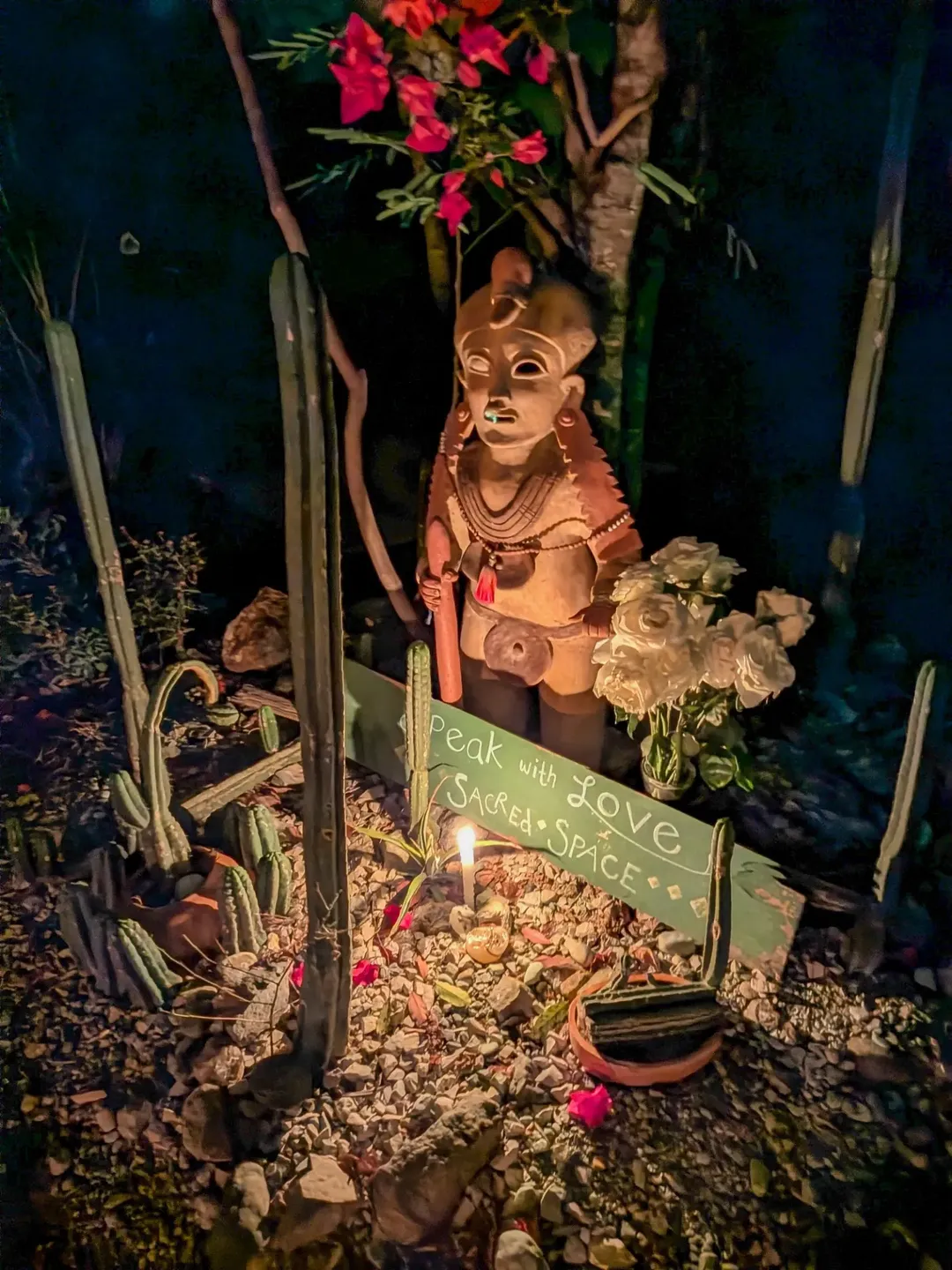
The New Moon offers another recurring opportunity to turn inward. With little or no visible moonlight, it can be a quieter point in the lunar cycle and a useful time for reflection and renewal. Before deciding what we want to create next, we can ask what needs to be cleared. At Aylly Medicina, we always do an earth offering to take a moment to give thanks, reflect, and set intentions for the next cycle.
You can ask questions such as:
- What has completed since the previous cycle?
- What am I still giving my energy to?
- What am I grateful for?
- What would I like to release?
- What seeds do I want to plant, and what seeds do I want to tend to?
New Year’s eve in the Gregorian calendar is a time that many people recap. But our lives do not operate on an annual schedule, so much happens in a month, let alone a year! Once a year is not enough to reflect on everything we experience.
So pick another time. The menstrual cycle offers a monthly rhythm of change, release and renewal. New Moon is a monthly opportunity to recap, regardless of gender. Birthdays provide an opportunity to look back at the year that has passed, not only at the goals we have achieved or failed to achieve.
There are also countless smaller cycles that do not appear on any calendar. A period of work comes to an end. A friendship changes. A child becomes more independent. A habit falls away. Something we once wanted no longer feels right.
If we wait until the end of the year to clear everything, we can spend months carrying what could have been acknowledged much earlier. A regular meditation practice gives us another option by creating a simple way to check in with ourselves throughout the year, not only on regular events, but each day as part of our everyday practice.
What Happens When We Do Not Close Cycles?
When we continually carry old experiences forward, they can begin to shape the present without us realizing it. We may react to a new situation based on something that happened long ago, compare new relationships with old ones or continue pursuing a goal because it once mattered, even though our priorities have changed.
The past can become part of the lens through which we see everything else. Sometimes we are physically present in one situation while mentally occupied by another, and this can affect our relationships, our decisions and our ability to experience what is happening in front of us.
Meditation can help us recognize these patterns because it makes repetition more visible. When we sit quietly, we may notice the same thoughts returning, the same concerns appearing or the same stories being repeated.
This is not about judging the mind for doing what minds do. The practice is to notice and return to the present moment. As this becomes more familiar, we can start distinguishing between something that genuinely needs our attention and something we have simply become accustomed to carrying. That distinction can create more freedom in everyday life.
Where Plant Medicine Comes Into the Process
Plant medicine can offer another context for looking at what we carry. In ceremony, away from many of the routines and distractions of everyday life, we may become more aware of patterns, emotions or experiences that are difficult to see clearly in our normal surroundings.
A ceremony can offer a different perspective and sometimes bring something into awareness that has been sitting beneath the surface for a long time. This might be an old pattern in relationships, a belief about ourselves, a fear that has been influencing our choices or an experience that we have never fully processed.
However, plant medicine is not about collecting powerful experiences or expecting a ceremony to solve everything for us. What happens afterwards matters.
At Ayllu Medicina, plant medicine is approached as part of a wider process that includes preparation, ceremony and integration. Meditation is one of the practices that can support this process, helping participants develop awareness before ceremony and continue observing what arises afterwards. The retreat environment also brings together practices such as meditation, yoga, nature and ritual, creating different ways to connect with the experience and with oneself.
After a ceremony, there can be a temptation to immediately interpret everything that happened. Sometimes it is more valuable to create space and observe what remains. An insight may become clearer with time, while an emotion may need to be felt rather than explained. Something that seemed obvious during the ceremony may look different once we return to ordinary life, which is why meditation is one of the practices we share to offer a place to continue listening.
Closing Cycles as an Ongoing Practice
We do not clear physical clutter once and expect our homes to remain empty forever. Life continues, and things accumulate again. Our inner world works in much the same way.
This is why closing cycles can become an ongoing practice rather than something reserved for New Year’s Eve or a major life transition. The New Moon can become a monthly reminder to pause and clear some space. The Equinox and Solstice can offer a seasonal checkpoint. A birthday can be a chance to recap the year. Your monthly menstrual cycle, the transition into menopause or the end of a particular period of life can provide another opportunity to reflect.
But we can also do it on an ordinary day when we notice that our minds feel crowded.
We can sit for a few minutes, follow the breath and ask ourselves what has been occupying our attention. We can notice what we are holding onto, what we have learned and what we may be ready to release. There may be something practical that needs to be addressed, a conversation that needs to happen or an emotion that needs more time.
We do not need to force an ending simply because we have decided that something should be over. The practice is to become aware of what is there and allow ourselves to respond consciously.
Making Space for the Present
Closing a cycle is ultimately about making more room for the present. When we are no longer spending so much energy replaying what happened, holding onto old expectations or worrying about what might happen next, we have more attention available for the life that is actually unfolding around us. We can listen more fully, respond rather than react and meet new experiences without automatically filtering them through everything that came before.
Meditation supports this process by giving us a regular practice of returning to the present. The mind wanders, we notice and we return to the breath. Over time, this simple practice can help us recognize when our attention has become caught in an old story and create enough space to choose where we want to place it instead.
Plant medicine can sometimes deepen this process by bringing patterns, emotions and experiences into a different light. At Ayllu Medicina, this work is approached through preparation, ceremony and integration, with meditation, yoga, purification and other practices forming part of a broader practice of heightening awareness. The intention is not simply to have a profound experience, but to create the conditions for awareness to become part of everyday life.
When to Close Cycles: Find a Time to Reflect
The New Moon, the Equinox, a birthday or a personal transition can all offer useful reminders to pause and take stock, but we do not have to wait for a particular date to clear some internal space. Our lives are constantly moving through cycles, and giving ourselves regular opportunities to reflect can prevent old experiences, thoughts and emotions from accumulating unnoticed.
As another season approaches, consider taking some time to look at what you have been carrying. What from the previous cycle is worth keeping? What have you learned? What are you ready to leave behind? Meditation can provide the quiet space to explore these questions without immediately needing to find an answer. Sometimes the process of closing begins simply with becoming present enough to see what is there.
Deepen Your Meditation Practice
This December, Ayllu Medicina’s plant medicine and meditation retreat in Ecuador offers a dedicated space to step away from everyday demands and give this process your full attention. Through meditation, plant medicine, sweat lodges, daily yoga, and other purification techniques, the retreat creates an opportunity to reflect on what has been, reconnect with the present and consciously make space for what comes next. Rather than carrying another year’s worth of unfinished experiences forward, the retreat offers time to pause, listen and consider what you are ready to release before beginning a new cycle.
We are also sharing two community events in Ecuador for Equinox; a women’s sweat lodge on 18th September, and on the 19th, a San Pedro ceremony. Contact us for more information.
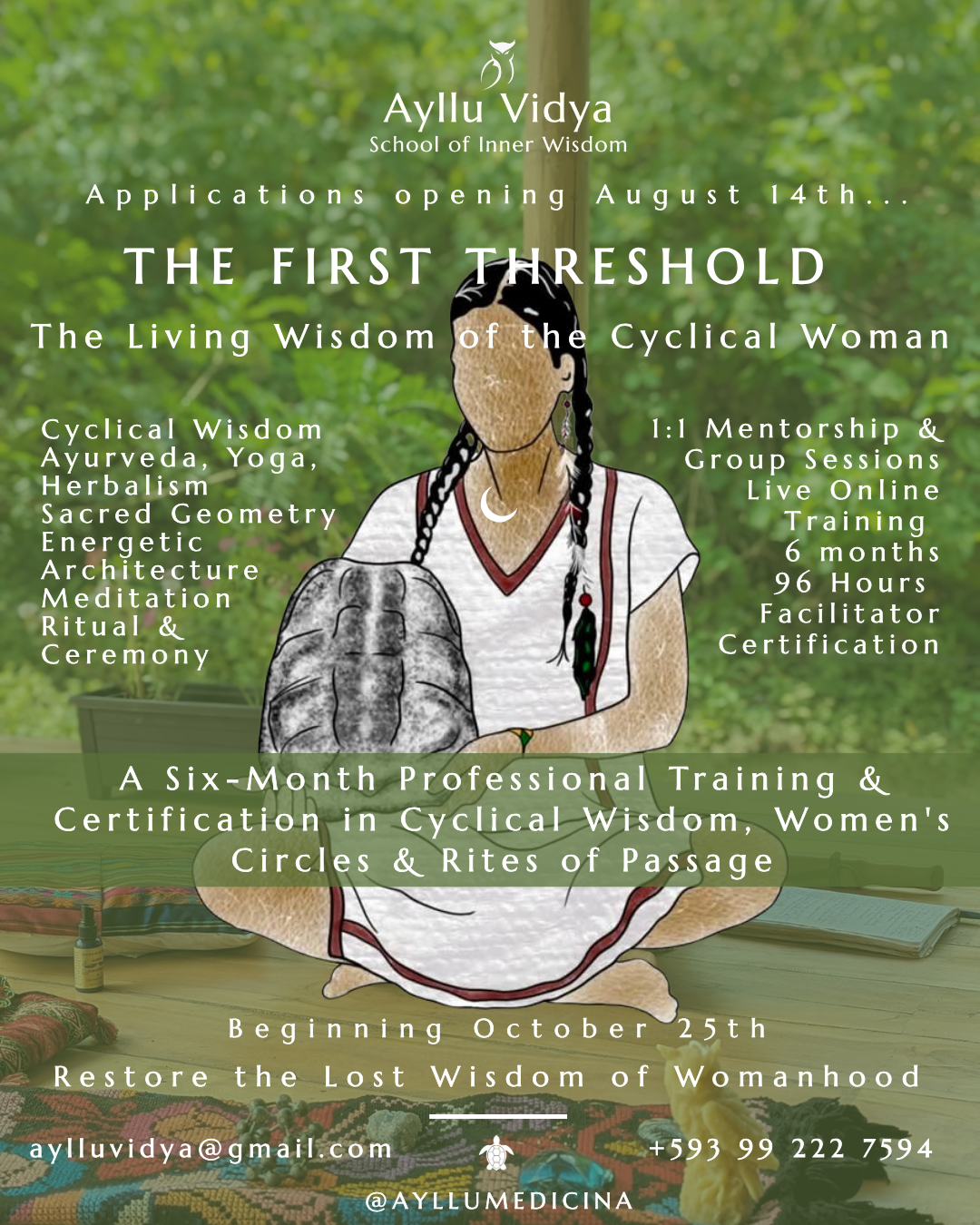
If you would like to learn more via a virtual offering, then women can consider our first Ayllu Vidya course: The First Threshold: The Living Wisdom of the Cyclical Woman. We are now opening a waiting list for the next course due to begin in July 2027. Learn more here.
by Emma Reeves | Aug 14, 2026 | Ayllu Vidya, Rites of Passage
We tend to think of growing up as something that happens gradually and, for the most part, privately. There may be a celebration, a certificate, a new job title, or a birthday cake, but then we are expected to simply carry on, often left wondering, what now? Yet beneath these milestones, something deeper may be shifting as an old identity falls away and a new one begins to emerge. This is why rites of passage matter: they give us space to pause, acknowledge the transition, and understand that becoming who we are is about far more than simply reaching the next milestone.
We move through school, leave home, begin working, form relationships, become parents, change careers, lose people we love, and enter new stages of life, often without anyone acknowledging that we have crossed a significant threshold. Becoming a parent is a good example. A baby arrives, people celebrate, gifts are exchanged, photographs are taken, and then life quickly becomes a new routine of feeding, sleeping, working, and caring. Yet beneath all of this, something much bigger has happened. A person has become a parent, and their identity, responsibilities, relationships, priorities, and understanding of themselves may all be changing at once.
The same is true of first menstruation, menopause, profound loss, a new stage of spiritual life, or entering later adulthood. These are not simply events that happen to us. They can change who we are. Yet modern life often gives us very little space to acknowledge that transformation.
We are expected to recognize these changes for ourselves, adjust to our new circumstances, and somehow know what comes next. But it was not always like this.
Across cultures and throughout history, communities developed ways of marking significant transitions. They understood that there are moments in life when a person needs more than a congratulations. They need time, guidance, reflection, and other people who can witness the change taking place.
These are what we often call rites of passage. Read on to explore why rites of passage still matter and what they can offer us in modern life.
What Are Rites of Passage?
A rite of passage is a meaningful practice, ceremony, or period of transition that recognizes a person moving from one stage of life or identity into another. Instead of allowing a major change to happen unnoticed, it gives that change a place, a process, and often a community.
Rites of passage can take many forms. They may include:
- ceremony
- storytelling
- teaching and counsel
- time apart from ordinary life
- reflection
- challenge
- celebration
- being welcomed into a new role or given new responsibilities
The details differ greatly across cultures, but the underlying idea is remarkably human: when something important changes in a person’s life, it can help to acknowledge that change intentionally and help guide them through the transition with care.
Rites of passgae are not simply about age. They can accompany many of life’s thresholds: birth, first menstruation, pregnancy, becoming a parent, leaving home, entering a vocation, marriage, leadership, grief, or the transition into later life.
Some Indigenous traditions in North America, for example, have included forms of vision questing in which an individual spends time apart from ordinary community life seeking spiritual guidance or insight. The practices and meanings differ between Native nations, so there is no single universal “vision quest.” What is significant here is the recognition that a profound inner transition can be given time, attention, guidance, and meaning to find their place in their community.
Pregnancy and becoming a parent offer another powerful example. The arrival of a child changes more than the physical circumstances of a family. It can transform identity, relationships, responsibilities, and a person’s place within their community. Across cultures, pregnancy, childbirth, and the postpartum period have therefore been accompanied by different forms of ritual, support, teaching, and celebration, such as blessing ways and closing of the bones ceremonies.
In this sense, a rite of passage says: something has changed, and you do not have to cross this threshold alone. It raises an important question for modern life: What if we were never meant to grow alone? And what if, in a world that feels increasingly disconnected, rites of passage matter now more than ever?
Marking the Transitions That Shape Us
There is a gap in modern life. We have plenty of milestones, but few meaningful ways to understand what they ask of us. Birthdays, graduations, weddings, baby showers, and retirement parties mark important moments, yet the deeper transitions beneath them often go unexplored, leaving us quietly wondering how we are meant to step into this new chapter, and why everyone else seems to know what they are doing when, in reality, they are probably wondering the same thing.
A woman’s first menstruation is one of those important thresholds. It can profoundly change how she understands her body, identity, and cyclical nature, yet many girls receive little more than an awkward explanation, a packet of pads, and the message that menstruation is something to manage or hide. There is rarely space to understand the rhythms of a cyclical body or receive the wisdom of women who have lived through these changes themselves.
A rite of passage offers another possibility: knowledge, celebration, connection, and the wisdom of women elders. It allows a girl to meet her first bleed with dignity and understanding, learning to work with her cyclical nature rather than against it from the beginning. Imagine if we had all been given that.
These transitions are significant, even when they look ordinary from the outside. Too often, we cross important thresholds without anyone saying, “Something has changed, and we are here to help you understand what comes next.” Instead, we are left to work it out alone. Rites of passage remind us that we were never meant to navigate life’s biggest transitions alone. They give us guidance, community, and a conscious way to move from who we were into who we are becoming.
The Wisdom of Those Who Came Before Us
Modern culture places a great deal of value on independence. We are encouraged to discover ourselves, make our own decisions, build our own lives, and learn from our own mistakes.
Independence is important, but there is a difference between being independent and being isolated.
Every generation contains people who have already crossed the thresholds that others are approaching. They have experienced relationships, parenthood, career changes, grief, failure, success, aging, and starting over.
Yet we do not always create spaces for that knowledge to be passed down.
Instead, we search for answers everywhere else. We read books, listen to podcasts, scroll through social media, and search the internet for advice. All of those things can be useful, but there is something different about sitting with someone who has actually lived through the experience you are facing. Have you gathered with your elders and heard their stories, or received advice from older friends or siblings?
There is a kind of intergenerational wisdom that can only be passed down through relationship. It lives in stories, experiences, traditions, and the presence of people who have walked the road before us.
This is one reason rites of passage still matter. A rite of passage can create that connection between generations: not with all the answers, but providing a nourishing space of support, care, and wisdom, so ancient knowledge remains intact and can adapt to modern living.
The Importance of Being Witnessed
There is another reason rites of passage matter: they make personal change visible.
Some of the biggest transitions in our lives happen with very little acknowledgment from the outside world.
Many of us have been there: You may have become a teenager and suddenly found yourself navigating a changing body, new expectations, and questions about who you are, where you belong and what your purpose might be. You may become a parent and discover that your entire understanding of yourself has shifted, while everyone around you simply sees a new baby. You may enter menopause, experiencing profound physical, emotional, and hormonal changes, yet often with little acknowledgement, guidance, or sense of closure for the life stage you are leaving behind.
A rite of passage gives a community a chance to say, “We see that something has changed.” Being witnessed does not mean being put on display. It means having other people recognize that the transition you are experiencing matters.
Managing the In-Between Stages of Life
One of the most interesting parts of a rite of passage is the period in between identities. You are no longer fully who you were, but you are not yet comfortable with who you are becoming.
This in-between space can appear in many forms: leaving home, becoming pregnant, experiencing the first signs of menstruation, entering perimenopause or menopause, ending a relationship, changing careers, or stepping into any completely new stage of life.
Modern life tends to reward certainty. We are expected to know what we want, where we are going, and who we are becoming. Yet some of the most important periods of our lives are the ones when we simply do not know yet.
That uncertainty does not necessarily need to be rushed through. It can be a space to slow down, reflect, ask deeper questions, and move forward with greater intention.
Traditional rites of passage recognized the importance of this in-between time. They created space for the old identity to be acknowledged, the new identity to begin forming, and the person to receive guidance before returning to everyday life with a renewed sense of self and purpose.
Modern life could benefit from making more room for this kind of pause. We are constantly encouraged to keep moving, adapting, achieving, and getting to the next thing, often without taking time to understand what is changing within us.
Why Rites of Passage Still Matter: Go Within
Rites of passage can offer something that modern life often lacks. Rather than treating a major transition as something to move through as quickly as possible, a rite of passage creates a structure for acknowledging the change and giving it meaning.
Not every life transition needs an elaborate ceremony. But many can benefit from having space for reflection, guidance, and connection with others who understand what it means to cross a similar threshold.
Becoming a teenager, for example, could be more than navigating hormones, school, social expectations, and eventually the pressure of a college application. It could also be a time to ask: Who am I? Where do I belong? What do I value? What is my purpose?
In some Indigenous traditions, vision quests have offered periods of solitude, reflection, and spiritual seeking during important life transitions. While traditions should be understood within their own cultural contexts rather than simply replicated, they point to something deeply human: the value of intentionally stepping away from ordinary life to listen, reflect, and seek direction.
Becoming a parent could be more than a baby shower and preparing a nursery. Entering perimenopause or menopause could be more than managing symptoms. Leaving a career could be more than updating a résumé and finding the next job.
These transitions can be supported through ritual, reflection, and gathering with others who have walked similar paths. A rite of passage gives shape to change, creating space to acknowledge what is ending, make sense of what is happening, and begin to understand what the next stage of life might ask of us.
Ritual through a rite of passage or gathering gives shape to change, helping us recognize that we have crossed a threshold before we rush toward whatever comes next.
Protect Wisdom and Community
The deeper purpose of a rite of passage is not the ritual itself, but the recognition that we do not have to navigate change alone. In a culture that often treats life as an individual project, we are told to figure ourselves out, manage our bodies and hormonal changes, become parents, reinvent ourselves, and keep moving. Yet human beings learn through relationship, by listening to elders, sharing stories, witnessing one another, and receiving wisdom from those who have walked these paths before us.
Rites of passage help protect that wisdom from being lost. They create a bridge between generations, giving elders a place to pass on what experience has taught them and younger people a chance to receive knowledge that cannot always be found in books, classrooms, or online. They also strengthen community by reminding us that our transitions matter to more than just ourselves. In a time when so many people feel disconnected and are expected to navigate life’s biggest changes alone, that sense of belonging is more important than ever.
We have not just lost the sacredness of milestones. Many of us have lost the community, wisdom, and shared practices that help us understand them. Rites of passage give us a way to bring those things back.
A School for Learning Together and Honoring Life Transitions
This is part of the inspiration behind our new school of inner wisdom, Ayllu Vidya.
If rites of passage remind us that we need one another during times of transformation, then education can become much more than the accumulation of information. It can become a way of understanding ourselves, our relationships, our responsibilities, and our place within a wider community.
This is the kind of learning we want to explore through Ayllu Vidya: learning that recognizes that some things are understood not simply by being taught, but by being lived, witnessed, practiced, and passed from one person to another.
The First Threshold
Our first professional training, The First Threshold: The Living Wisdom of the Cyclical Woman, grows from this philosophy. Over six months, women will explore cyclical wisdom, women’s circles, ritual, and foundational rites of passage while developing the knowledge and skills to bring this work into their own communities.
Education and community can prepare us for a profession and help us develop practical skills. It can also teach us how to move through life: how to recognize the thresholds we are crossing, draw on the wisdom of those who have gone before us, and accompany others through their own transitions.
At a time when so much of life happens through screens, when connection can be constant yet still leave us feeling alone, these questions become increasingly important.
What if we were never supposed to grow alone?
What if becoming who we are was always meant to happen in relationship, through the stories we inherit, the people who guide us, the communities that witness our becoming, and the rituals that help us recognize when one chapter of life is giving way to another?
This is why rites of passage still matter. They remind us that transformation is not something we simply move through. It is something we can mark, witness, share, and honour together.
This is the kind of education we believe is worth remembering. Ayllu Vidya is an invitation to learn differently: through experience, relationship, reflection, and community.
To remember that wisdom is not only something we acquire. It is something we embody, share, and carry forward. Registration for The First Threshold is now open, learn more here or contact us if you have any questions.

by Emma Reeves | May 15, 2026 | Ayllu Medicina Plant Medicine Retreats
What happens after a plant medicine ceremony ends? After the visions, insights, emotional releases, or moments of connection, the question is: how do we carry those experiences into our everyday lives? How do we integrate plant medicines, what we’ve seen, felt, and remembered in a way that creates lasting transformation?
Plant medicine can open a doorway into deeper awareness, bringing unconscious patterns, emotions, imbalances, and truths to the surface. But the ceremony itself is only the beginning. Without grounding, reflection, and supportive daily practices, these experiences can fade or become difficult to fully embody.
This is why, at Ayllu Medicina, we share various tools and practices for integration, including the ancient healing system of Ayurveda. This month, we spoke to our yoga instructor and Ayurvedic practitioner, Vanessa Lavigne, to learn more about Ayurveda. Read on to learn more about how Ayurveda and plant medicine are connected, and how they can balance you physically, mentally, and emotionally.
What Is Ayurveda?
Ayurveda is a holistic system of medicine, which has been practiced in India for thousands of years, with the Sanskrit name translating to ‘the wisdom (or science) of life’.
Ayurveda believes that what is in the cosmos is also within us, with each individual having a unique formation of the five elements: Ether, Air, Fire, Water, and Earth. These elements combine into three doshas:
- Vata (air + ether)
- Pitta (fire + water)
- Kapha (earth + water)
Ayurveda views each person as having an inherent constitution (prakruti), an elemental blueprint established at conception and relatively constant throughout life. Daily nourishment, environment, emotional experiences, and our relationships with others can disturb or support this balance, giving rise to changing states of imbalance (vikriti), which Ayurvedic practice aims to restore.
So Ayurveda does not just focus on treating symptoms or viewing health as the absence of illness. It focuses on health as a state of balance between the body, mind, spirit, environment, and nervous system, aiming to find the true balance and identify the imbalances of each individual. It aims to help people understand their unique nature and find balance once more, bringing more harmony and soul into the individual’s experience through various practices.
Ayurveda & Plant Medicine: What’s the Connection?
The connection between Ayurveda and plant medicine is rooted in a shared understanding that human beings are inseparable from nature, and that true balance depends on how we live in relationship with it.
Both approaches work with the intelligence of plants, but in slightly different ways. Ayurveda uses herbs, diet, and lifestyle to restore balance based on an individual’s constitution (prakruti) and current state of imbalance (vikriti).
Plant medicine traditions often use specific plants to open perception, release emotional patterns, and bring unconscious material into awareness, along with many other healing purposes. The medicine of plants can help harmonize the body, without people necessarily having a clear explanation as to how or why something occurred. Ayurveda can also work beyond the intellect, addressing the mind, body, and soul levels.
Another key connection is individuality. In both systems, the same plant or experience can affect each person differently depending on their body, mind, emotional state, and environment. Drinking Ayahuasca or sitting in a San Pedro ceremony is different every time, because people are different each time they meet with the plant medicines. Ayurveda also addresses this changing state of balance and interplay of the elements in each individual.
Both Ayurveda and plant medicine also view the synergy with plants. They do not view plants as substances, but intelligent bridges for the mind, body, and consciousness.
Another connection between Ayurveda and plant medicine is integration. Plant medicine can create expanded awareness or emotional release, while Ayurveda offers the daily framework to stabilize and embody those experiences through food, digestion (agni), nervous system regulation (vata balance), breathwork, and daily rhythm. This is why our June retreat is focusing on Ayurveda practices that participants can continue when they return home.
The Physical Body: Returning to Balance
Ayurveda understands that every individual carries a unique combination of the five elements: Ether, Air, Fire, Water, and Earth. These elemental qualities form our constitution, or doshic blueprint, influencing everything from digestion and energy levels to emotional tendencies and thought patterns.
There is no single path to healing because no two people are the same. After all, what nourishes one person may create an imbalance in another. Ayurveda recognizes that health is deeply individual, shaped not only by our constitution, but by climate, seasons, trauma, lifestyle, relationships, and even the stage of life we are moving through.
The natural world around us is constantly shifting, and we are continuously responding to those changes. Temperature, environment, stress, food combinations, sleep cycles, and, for women, our hormonal cycles, all influence our internal balance.
Ayurveda pays close attention to these relationships. It teaches that the body is always communicating with us, and that symptoms are often messages rather than problems to suppress. Physically, Ayurveda addresses things such as the diet of each individual, food combinations, and eating timings. It is one of the few systems that recognizes we are what we eat, not only based on combinations but also timings, along with giving space to women’s cycles and how this can impact food choices and practices throughout each month.
Ceremony & Diet
Plant medicine can help reveal these imbalances quickly and powerfully. Sometimes what arises in ceremony goes beyond the understanding of the intellect. Emotions surface, physical sensations can intensify, and sometimes old memories can emerge. The body begins releasing what has been held for years.
A plant medicine ceremony brings awareness to these releases, and then Ayurveda can help the body integrate the realizations physically, through nourishment, regulation, and movement. Similarly, the plant medicine dietas begins a cleansing and rebalancing before the plant medicine retreat. In Ayurveda, herbs are chosen for their qualities, such as heating or cooling, grounding or stimulating, clarifying or calming, based on how they restore balance within an individual’s constitution.
The Mental & Emotional Body
Ayurveda recognizes that emotional health and physical health cannot be separated. Long before we consciously remember experiences, the nervous system is already absorbing information from the world around us. Even during gestation, the emotional state of the mother, stress levels, nourishment, and environment are understood to influence the development of the child.
From an Ayurvedic perspective, unprocessed emotional experiences are not simply forgotten; instead, they can become stored in the body as subtle imbalances over time. When emotions are not fully expressed or worked through, they may accumulate in the nervous system for years, eventually manifesting as physical or emotional issues such as anxiety, fatigue, or tension.
In this way, what we cannot move through emotionally can shape patterns of stress, reaction, and perception in the body. This is why daily practices and purification rituals are considered important for regularly clearing and decluttering the system.
In this way, the question becomes: what are we still carrying that the body has not been able to move through?
It is also why emotional release can become such a powerful part of plant medicine ceremonies. What surfaces during these experiences is not random; it is often the body finally finding the safety and openness to release what has been held beneath the surface. Ayurveda also offers practices that support this emotional integration gently and consistently. These practices include:
All of these are considered tools for balancing the mind and regulating the nervous system. Breath, in particular, becomes a meeting place between the physical and spiritual body. Breath is not only a way to shift physiology, but also consciousness. Often, plant medicine ceremonies, meditation, and other practices such as Ayurveda can begin to bring light to these spaces.
During Ayllu Medicina retreats we share daily yoga classes with breathwork and meditation, along with sound therapy to help restore and reset.
Udana Vayu and Singing: A Connection
In yogic philosophy, the flow of prana is understood through different energetic movements, or vayus. One of these, Udana Vayu, governs expression, speech, and the upward movement of consciousness. It is associated with the throat and higher awareness. Practices such as chanting, singing, prayer, and intentional sound help activate this channel, supporting not only emotional release, but also clarity, expression, and reconnection to a deeper sense of awareness.
This connects to plant medicine ceremonies: sound, silence, breath, and prayer are such essential elements. They help regulate the nervous system while also opening subtle pathways of perception. This is why at Ayllu Medicina retreats, we also share music and song circles, so people can connect with their own voices.
Within this context, plant medicine can be seen as an accelerant, something that brings what is held within the system into direct awareness. However, plant medicine alone is not the full process. The environment, intention, emotional safety, nervous system state, and capacity for presence all shape the experience. (link ayllu)
Ceremony can therefore act as a reset point, being a space where the usual patterns of the mind soften, and we are given the opportunity to reconnect with ourselves beneath conditioning, emotion, and mental clutter. The depth of what is received in those moments is then carried forward through integration, where Ayurveda offers some grounding practices to embody what has been revealed.

The Soul Body: Remembering Our True Nature
Beyond the physical body and emotional mind lies another dimension of healing: the remembrance of who we truly are. Many spiritual traditions teach that suffering arises when we become disconnected from our true inner essence, when we identify only with the mind, the body, or our external circumstances. Plant medicine ceremonies can create moments where that separation dissolves and the remembrance of the connection to the whole returns.
Ayurveda focuses on putting more soul (or awareness) into the body through intention, awareness, and mindfulness. Plant medicine can also reveal moments where we remember our connection to nature, to spirit, to our ancestors, to each other, and to something greater than ourselves.
These experiences often go beyond language or intellectual understanding. They are felt directly through the heart. Ayurveda and yoga both teach that the body is not an obstacle to spiritual growth, but a vessel through which consciousness can awaken more fully.
At Ayllu Medicina, we see ceremony not as an escape from life, but as a way to become more present within it. The goal is not to chase extraordinary experiences, but to bring awareness into ordinary moments, including how we eat, breathe, move, speak, rest, and care for ourselves each day.
The real integration happens after the ceremony ends. Through consistent practices, intentional living, and self-awareness, finding alignment slowly becomes less about seeking something outside of ourselves and more about remembering the balance that has always existed within.
As the nervous system becomes more regulated and the body more balanced, we become more capable of sitting with ourselves in stillness. Then meditation deepens, awareness expands, and intuition becomes clearer. Healing then becomes more than simply removing pain. It becomes a process of alignment with purpose, truth, and that deeper intelligence already living within us. .
Ayurvedic Practices
One of the most important aspects of healing is regulating the nervous system. When we are constantly overstimulated, anxious, disconnected, or exhausted, it becomes difficult to access clarity, intuition, or deeper states of awareness.
Ayurveda offers grounding practices that help bring the body back into balance. Some Ayurvedic practices include Shirodhara, which is a warm oil or hebal liquid being poured onto the third eye area to reduce excess ‘Vata’ and calm the nervous system, bringing altered states of awareness. Another of these practices is Abhyanga, warm oil self-massage. Traditionally done with sesame oil for grounding or coconut oil for cooling, Abhyanga helps nourish the tissues, calm the nervous system, lubricate the muscles and joints, and support the body’s natural healing processes.
In yoga therapy, we often see how imbalance develops through compensation patterns within the body. One side becomes constricted while another overextends to compensate. Pain is not always caused by weakness or tightness alone, but by instability and disconnection. Healing is not always about pushing deeper into flexibility. Sometimes it is about creating stability, awareness, and support.
Through mindful movement, strengthening, breath, posture, and therapeutic practices, the body gradually relearns harmony. At our retreats, we have daily yoga classes and, in June, we will be sharing more about Ayurvedic practices.

The Ceremony Continues: Ayurveda, Yoga, & Plant Medicine
Plant medicine can reveal hidden truths and reconnect us to the sacredness of life. In this opening, something essential is remembered, but what follows is just as important: how we live with what has been revealed.
This is where Ayurveda can become a guide for integration and everyday life. It offers practical ways to embody insight through daily rhythm, through food, breath, movement, rest, ritual, and self-awareness. In this way, what is experienced in the plant medicine ceremony is not left as a memory but gradually woven into the body, the nervous system, and everyday life.
Through this ongoing relationship with ourselves, the body, mind, and spirit begin to come back into harmony, not through force or effort, but through consistency, presence, and care. Integration is the path; once the ceremony opens the door. And at Ayllu Medicina, we share practices to help guide you, so we can remain in our heart space, in balance, once the ceremony of life begins.
If this resonates with you, we invite you to join us for our June Fire of the Heart Retreat, where we will explore this connection more deeply through plant medicine ceremonies, yoga, heart technology meditations, and Ayurveda workshops. Together, we will work with tools that support both expansion and integration, learning how to return to balance not only in moments of insight, but in the way we live each day.
Contact us to learn more!


by Emma Reeves | Mar 18, 2026 | Plant medicines
Huachuma, also known as San Pedro and Awakolla, is a sacred master plant that has been used ceremonially in the Andes for thousands of years. This plant medicine continues to be shared to this day, often in ceremonial environments or at plant medicine retreats.
While every ceremony and journey is different, certain qualities of Huachuma tend to remain consistent across traditions and experiences. Understanding these aspects can help people approach the medicine with a greater respect, openness, and awareness of the ceremonial context in which it is traditionally shared.
Are you curious to attend a San Pedro ceremony or retreat? Below are seven things to know about Huachuma and the nature of working with this ancient plant teacher.
What Is Huachuma?
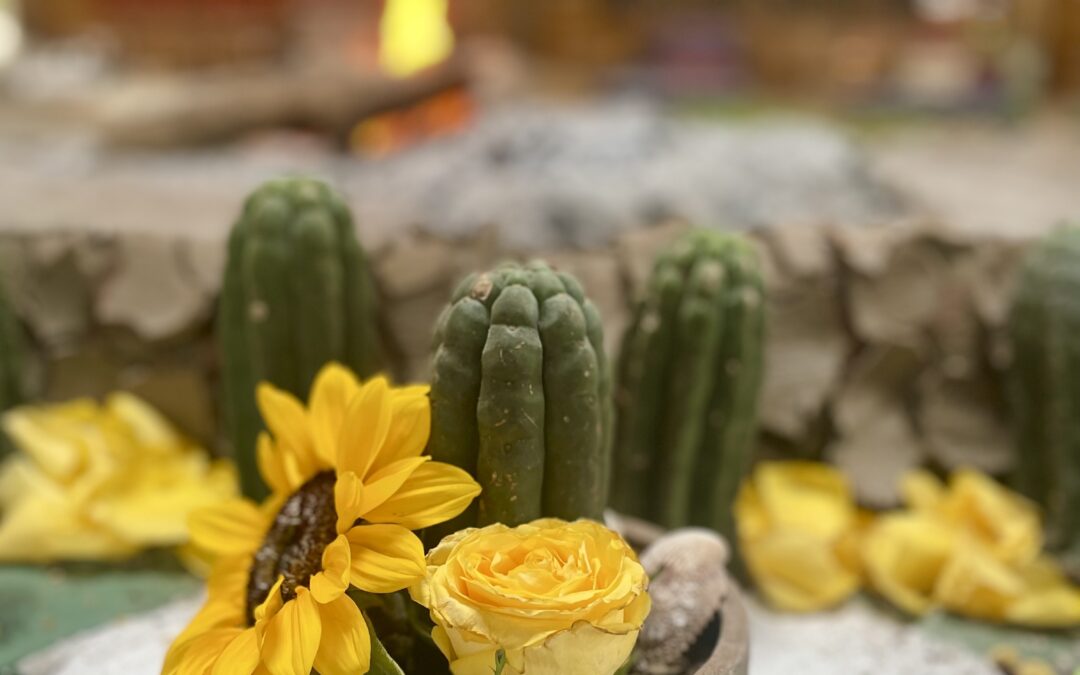
Huachuma is the Quechua name for the San Pedro cactus, a type of columnar cactus native to the mountains and valleys of countries such as Peru and Ecuador. The medicine is typically prepared from the Echinopsis pachanoi cactus species.
For thousands of years, the cactus has been used by civilizations in different ways, such as in ceremonial contexts, healing, and long pilgrimages throughout the Andes. It is a master plant teacher, now often shared within a ceremonial setting that emphasizes intention, connection with nature, and reflection.
Awakolla is another name commonly used in Ecuador, and San Pedro is the Spanish name, which came after the Spanish occupation. It refers to the Christian saint, St. Peter, because he is the saint who holds the keys to heaven. At the end of a journey with this sacred medicine, you can often see why it has this name, as the medicine can help you reach states such as deep gratitude, and a deep state of communion with nature.
1. San Pedro Is Often Referred to as a Grandfather Medicine
In many traditions, San Pedro is considered a Grandfather medicine, because it is a teacher associated with wisdom, patience, and grounded guidance.
The medicine is often experienced as having a steady and supportive presence. Its focus is on sharpening your perception and presence. Insights may arise gradually through reflection, emotional clarity, or deepening your sense of connection, so you can come to your own understanding of what is unfolding.
Some people describe Huachuma as helping bring coherence between the heart and the mind, allowing thoughts, emotions, and intuition to feel more aligned. Because of this quality, Huachuma is often approached as a medicine that encourages listening and awareness.
Its teachings may appear through simple realizations or shifts in perspective that unfold throughout and after the ceremony. The medicine can also promote gut and physical health, with purging being a possibility.
2. Some San Pedro Ceremonies are in the Daytime
Some other plant medicines are traditionally shared in nighttime ceremonies. San Pedro is shared at night and during the day.
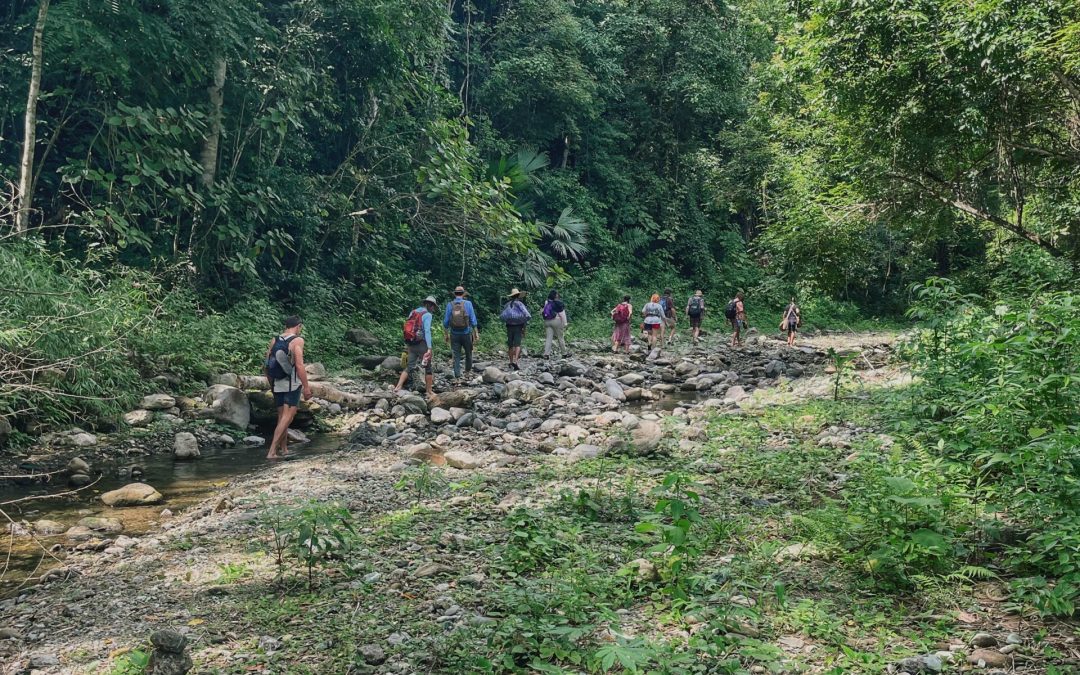
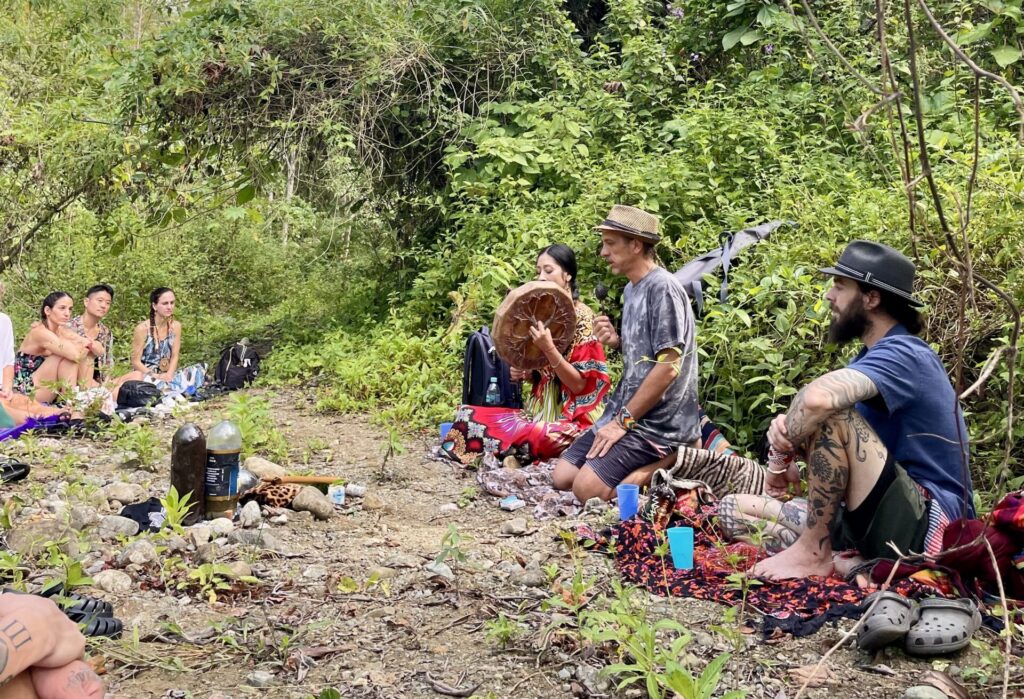
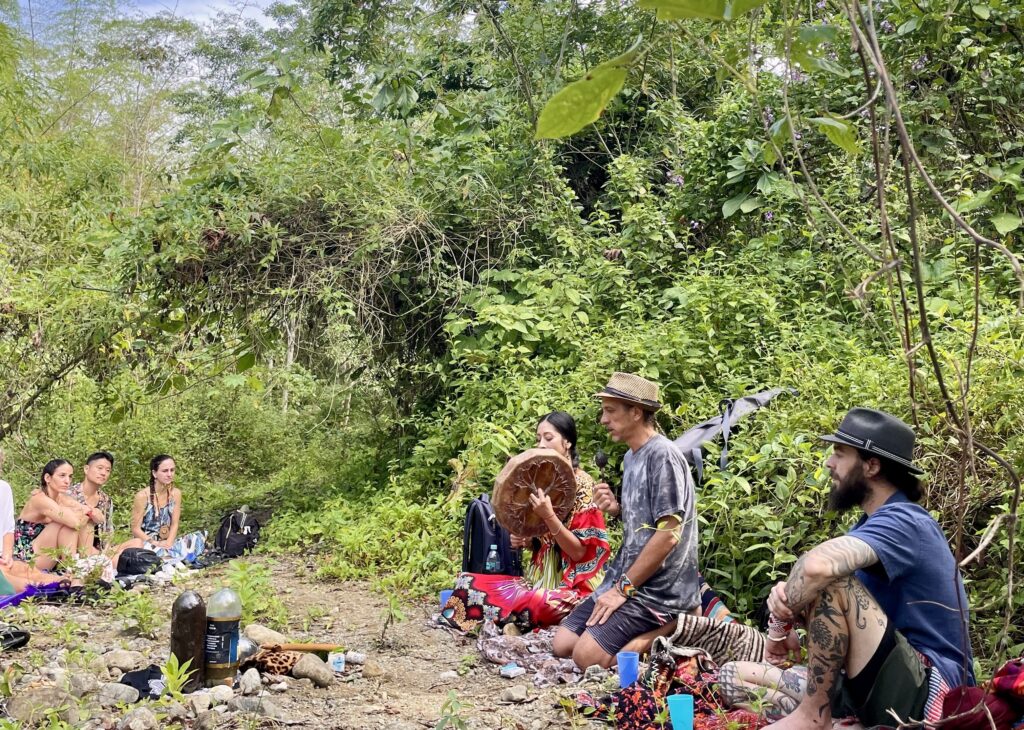
Daytime San Pedro ceremonies commonly begin in the morning and last throughout the daylight hours. Participants may spend time outdoors or walking in a natural area. For example, on Ayllu Medicina plant medicine retreats, we sometimes share a San Pedro Medicine Walk during the daytime, at a nearby river.
The presence of the San Pedro medicine and being in nature becomes part of the experience, inviting a sense of openness and awareness of the world around us. Many people find that San Pedro deepens their perception of nature in different ways. For example, it may bring attention to the subtle details of nature we may usually overlook; such as the movement of wind, the warmth of the sun, appreciating different colors, or noticing plant species or animals.
3. San Pedro and Ayahuasca are Different Medicines
Sometimes people ask what the differences are between Ayahuasca and San Pedro. During Ayllu Medicina retreats, we share both Ayahuasca and San Pedro ceremonies because the medicines complement each other well, balancing masculine and feminine energies.
Ayahuasca focuses on your lower energy centers and your roots, often being called a Grandmother. The plant teacher is from the Amazon, whereas the San Pedro medicine is a grandfather spirit from the mountains. The San Pedro medicine focuses on the energy of your heart, so you can raise your energy and enter this space.
Huachuma frequently works in subtle ways, which means the medicine may be indirect throughout the ceremony, so you reach your own understanding of what needs to be released.
Each plant has its own traditions, teachings, and ceremonial contexts. We are fortunate to be able to share both sacred plant teachers during our retreats. Learn more about our medicine guides’ journeys here.
4. Connection With Nature Is Central to the Experience
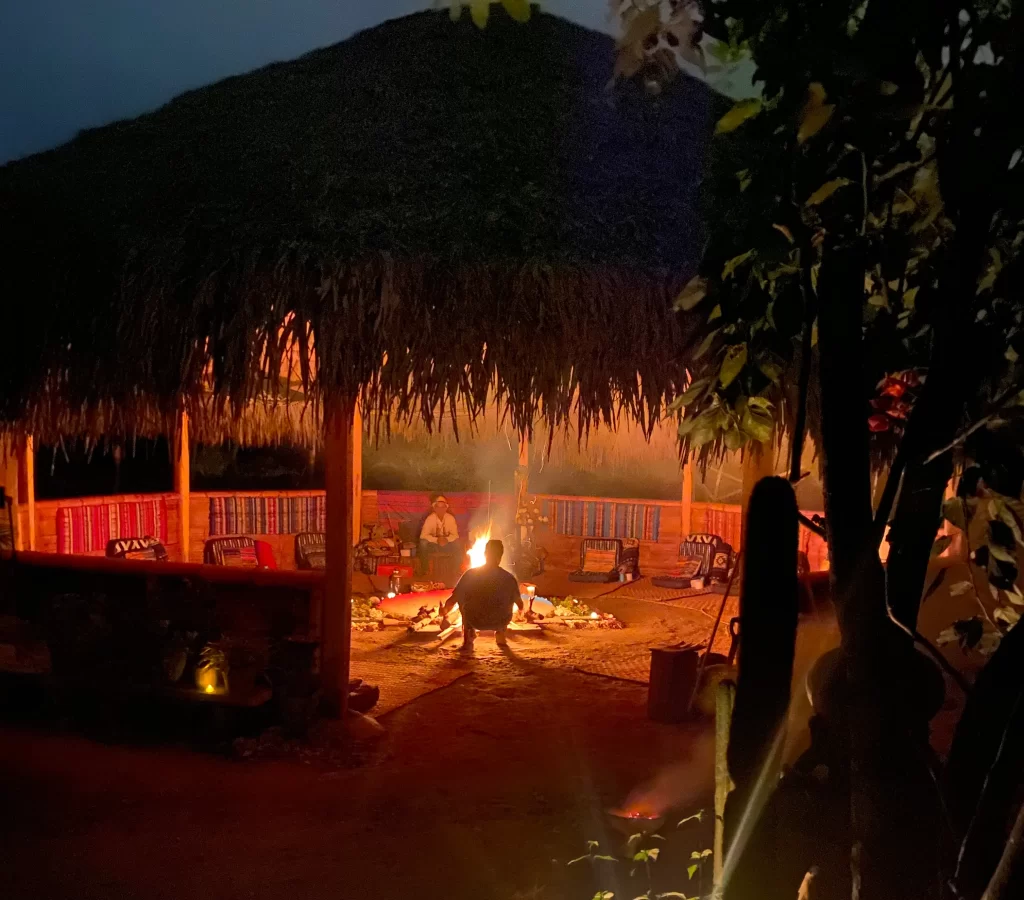
Huachuma ceremonies are often held in close relationship with nature. In many traditions, the natural environment is considered an essential part of the ceremonial space. Participants may spend time walking through nature, which is the main altar for all of us. In ceremonies at night, there is often a fire in the center to observe, and participants sit on the ground, remembering the sacredness and support of nature all around us.
Through this process, many people experience a renewed sense of connection with the natural world. Rather than feeling separate from nature, the medicine often encourages the feeling of being part of a larger living system. This perspective reflects Andean traditions in which mountains, rivers, plants, and animals are not resources, but they understood as being part of a living, interconnected system, deserving respect and reciprocity.
5. San Pedro Medicine Lasts a While
San Pedro ceremonies can last throughout the day or through the night until sunrise. The medicine typically lasts throughout the ceremony, and the effects remain the next day, in comparison to Ayahuasca, which is usually a shorter journey.
Many people find that this gradual unfolding contributes to the feeling of clarity and groundedness often associated with the San Pedro medicine. During Ayllu Medicina retreats, we have a retreat schedule designed to support the day or evening post-ceremony, with time in nature, restoration, music, and rest.
6. Huachuma Has a Long History in the Andes
The ceremonial use of Huachuma stretches back thousands of years in the Andes. Archaeological evidence suggests that ancient cultures incorporated the cactus into ritual and spiritual practices long before modern times. One well-known example appears in carvings at the ancient ceremonial center of Chavín de Huántar, where figures are depicted holding the cactus in ritual settings.
This long lineage reflects a worldview in which the cactus was approached with deep reverence. Within many traditions, the plant is seen as a teacher within the natural world.
The ceremonial setting helps create a respectful container for working with the medicine and honoring its place in tradition. It is recommended to find experienced medicine guides with the blessings to share this medicine. Learn more about our Ayllu Medicina team here.
7. Preparation and Integration Are Important Parts of the Process
Working with Huachuma is often seen as a process that begins before the ceremony itself and continues long afterward. Preparation can help create a supportive mindset for the experience. In the days leading up to a ceremony, some people choose to slow down and simplify aspects of their daily life.
Preparation may include:
- simplifying one’s diet
- spending time in nature
- reflecting on personal intentions
- reducing stimulation or distractions
The purpose of plant medicine preparation is not to control the experience but to approach the ceremony with respect, openness, and clarity. You can learn more in this blog post.
Equally important is what happens after the ceremony. Insights that arise during the experience may continue to unfold in the days or weeks that follow. Integration can involve reflection, journaling, conversations with trusted friends or guides, or simply giving oneself time to process the experience.
In many ways, a plant medicine ceremony is a stepping stone of a deeper process of learning and understanding for our lives. During our retreats, we have sharing circles and offer post-retreat integration support to help with these unfolding insights. We also share various tools you can take home with you, to help maintain the changes the retreat week can bring.
Frequently Asked Questions About San Pedro
How long does a Huachuma ceremony last?
Huachuma ceremonies typically last between 8 and 12 hours, with daytime ceremonies running throughout the day and night ceremonies finishing around sunrise.
Is Huachuma the same as San Pedro?
Yes. Huachuma is the Quechua name for the San Pedro cactus and the ceremonial medicine prepared from it.
Is Huachuma always visionary?
Not necessarily. You may experience visions, or visions in the fire. Many people describe the medicine as subtle, working through heightened awareness, reflection, and connection, such as post-ceremony noticing colors in ‘high definition’.
Where is Huachuma traditionally used?
Huachuma has long ceremonial traditions throughout the Andes, such as in Bolivia, Peru, Colombia, and Ecuador.
What medications interact with San Pedro?
If you are interested in a San Pedro retreat or ceremony, please contact us to discuss your medical history.
How Do You Prepare San Pedro Medicine?
We share more about this process during our plant medicine retreat weeks.
Is there Music During a San Pedro Ceremony?
Yes. It depends on the ceremony, but as San Pedro is a medicine that gives you energy, the music usually also focuses on raising the energy. The music helps guide the ceremony, accompanied with sacred instruments.
How Can I Attend a San Pedro Ceremony?
Join a plant medicine retreat or ceremony! Our next retreat is our San Pedro retreat this April.
San Pedro Medicine: A Medicine of Awareness & Connection
San Pedro is a medicine of presence and relationship – relationship to the nature around us, our inner nature, the medicine, and to all of those who came before us. Many people find that the medicine encourages a deeper relationship with life as it already is, through connection with nature, remembrance of our ancestors, clarity of perception, and alignment between the heart and mind.
Approached with care, humility, and respect for its traditions, Huachuma ceremonies can offer an opportunity to slow down, listen more deeply, and reconnect with the Earth, natural world, and your true inner self.
Join us at Ayllu Medicina to connect with the medicine of San Pedro. We have an upcoming community ceremony this Saturday for Equinox, and our San Pedro Plant Medicine Retreat in April 2026. This retreat offers the opportunity to connect with this master plant two times, during the day and at night, along with one ceremony of Ayahuasca, sweat lodges, daily yoga, and more!
Check out all our upcoming retreats here. Please contact us if you have any questions!