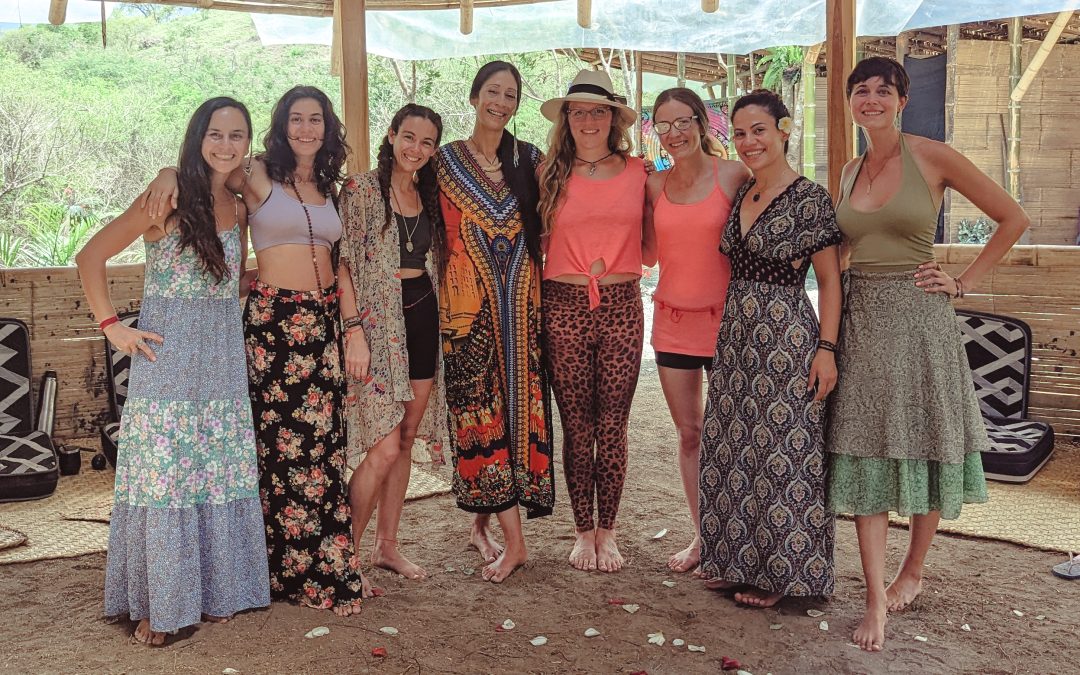
When women gather together in safe spaces, magic happens. And more than ever, women are beginning to remember this wisdom from our elders, coming back together and healing in many ways, including at women’s plant medicine retreats.
A women’s empowerment retreat can make some women jump for joy, and some women hesitate, depending on their experiences gathering in sisterhood. The good news is that a women’s plant medicine retreat is the perfect space to receive the benefits of sisterhood and self-healing for all women.
Are you wondering whether you should attend a women’s retreat? Read on to learn some of the unique benefits these female retreats offer.
1- Transformation In Sisterhood
Joining together with women from all walks of life gives you a chance to learn from each other. Everyone has their own path and experiences to bring to the plant medicine retreat.
Sharing stories, struggles, and achievements with other women is extremely uplifting. You quickly realize how much wisdom everyone has to share, simply through the experience of being a woman and what that means. Throughout the week, you feel the support of each other as you go through your own transformation.
Science has also proven the magic of women gathering together. It has been found that when women are in fight or flight mode, they feel more the call to gather than to react aggressively. So, when women come together in a group, it helps release the hormone oxytocin, which has a calming effect, allowing you to root down and go inwards on your transformational journey.
Oxytocin is also what helps empower women in different ways, such as after giving birth. If this magical hormone is increasing in your body, you are receiving nurturing energy to help connect to your true essence and reach your highest potential. This release of oxytocin also helps increase serotonin, which helps fight low mood, reduces stress, and improves well-being.
Female retreats give you the opportunity to gather in such a way and release these powerful hormones that can help be the leverage you need for deep healing. You can feel a sense of nurturing, safety, and peace. This allows not only the group to have a transformative experience together, but it allows you to go deeper into your own inner work too.
2- Women’s Retreat Community Support
A women’s empowerment plant medicine retreat allows you to experience the power of a healthy female community.
Studies have long found the value of female friendships. Some women can relate to the power of female friendships, whereas, for others, it may have been challenging to connect to other women previously.
The retreat container lets you connect with other women and realize you are not alone. It gives you a safe space to be heard, understood, and supported by sisters. It gives you space to take up space, express yourself and reconnect to your voice, which will also be nurtured in other ways, such as during song circles.
Although your plant medicine retreat experience is individual, you soon realize a communal experience is also happening. For example, after plant medicine ceremonies, such as Ayahuasca, we hold a sharing circle. It is common for retreat participants to relate to each other’s experiences, especially when women join together and share.
3. Remember the Ancient Ways Within
It is time to remember the ways of our elders, who would gather together, especially during their moon time. It is why some women also call women’s circles sanity circles, as there is a need for opportunities to gather as women and share once more. Gathering together at a women’s retreat allows you to reconnect to these ancient ways, which a patriarchal society has long tried to make us forget.
There was a time when women were honored for their wisdom and felt connected to Mother Earth. It is time we reclaim this power, as no one is going to do it for us.
A women’s retreat is the perfect space to begin. Once you start to create healthy and uplifting female bonds, you also help heal your own relationship with Mother Earth and other women in your life. Check out Hwaneetah’s talk on womb technology to learn more.
4. Empowerment and Confidence
Gathering together with other women during a women’s plant medicine retreat can empower you to own your feminine energy and full expression. When you return to the ceremony of life after the retreat, you can walk in confidence, knowing you have a community of sisters behind you, supporting you.
It is time to uplift each other and see beyond the narrative of competition that many societies fuel. Some women name these divides between women as wounds, such as the sister wound. But what matters is to find spaces where you can connect with other women again, realizing that sisterhood has the ability to empower you in ways you didn’t realize were possible.
It can be tempting to isolate yourself when you are struggling or lean on masculine relationships. There is definitely time, benefits, and space for these steps; however, sharing with sisters also helps empower you in unique ways. It is not about dismissing the masculine; it is about uplifting and supporting each other to step into our full potential.
5. Ancient Wisdom for Your Inner and Outer World
Our guide, Hwaneetah, will be sharing ancient wisdom for us to navigate these times in your true essence during our women’s detoxt retreat. Together in the female retreat container, you have the chance to delve deeper into these ancient practices, including:
Male and female energetics
Natural healing modalities
Moon wisdom, including 13 moon calendar
Meditation for closing circles
Ritual for unbinding
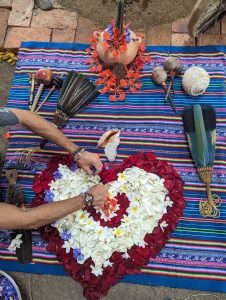
Connecting to the power of your womb and cyclical nature is an essential part of reclaiming your feminine essence, whether you are experiencing menstruation, perimenopause, or menopause. You will also have the opportunity to sit with the wise plant medicines of Grandma Ayahuasca and Grandfather San Pedro. These plant medicine ceremonies will help you balance your feminine and masculine energies to find equilibrium in your center.
There will be other ancient wisdom sharings, including sweat lodges, daily yoga, breathwork, and meditation. These will all help with purification for rebirth and renewal. You will also connect to the elements throughout the week, which will help you connect to your inner landscape once more.
Join Our Women’s Empowerment Retreat
Gathering together as women offers the chance to delve deep into your own nature and rise together in sisterhood. There is something deeply magical, transformative, and unique about women joining together in sacred spaces, so why not join a women’s empowerment retreat to experience this for yourself?
Ayllu Medicina has some exciting women’s offerings coming up. There is an upcoming women’s day detox retreat in March and our women’s plant medicine retreat in April. Hwaneetah also runs frequent women’s sweat lodges.
Feel free to reach out if you are interested in any of these retreats and events. We will be happy to answer any questions you may have!
Mother Earth experiences four main seasons every year, with the transitions marked by Solstice and Equinox. Solstice and Equinox are significant astrological markers that are not only a time to focus on the external changing of seasons but your internal landscape too. So, with the March Equinox coming up, what should you do?
The March Equinox is the Vernal Equinox in the Northern Hemisphere, also known as the Spring Equinox. And in the Southern Hemisphere, it is the Autumnal Equinox. Read on to learn more about how to celebrate Equinox and find balance during this time.
What Is an Equinox?
An Equinox is when the night and day are equal in length, with the term Equinox coming from Latin, meaning ‘equal night’. Spring and Autumn arrive on Equinox, whereas Solstice marks Winter and Summer. The two Equinoxes on Earth occur around March 20th and September 22nd each year.
Astrologically, an Equinox occurs because the sun is directly above the equator at noon. After the March Equinox, the sun’s subsolar point begins to travel North, marking the season of Spring in the Northern Hemisphere and Autumn in the Southern Hemisphere.
Why Is Equinox Important?
Equinox does not only mark the change of seasons. Equinox is a time of balance between dark and light, death and life, honoring the struggle and finding peace within it.
The Autumnal Equinox is often a time to celebrate the harvest and what needs to be shed. Whereas the Vernal Equinox marks the return of the light, the Spring, where seeds begin to be planted. And in general, Equinoxes are important times of rebirth and renewal, offering a moment to reflect on how to maintain balance moving forward.
Different cultures believe days like Equinox are the best time to transcend the physical realm, as everything is in balance. This includes the feminine and masculine, the day and the night, the light and the dark.
Also, for many cultures, the March Equinox is considered the first day of the new year. This is because ancient civilizations were in sync with nature, the moon’s movement, and the sun’s movement. Equinox is an important time to reconnect to nature and these cycles.
Equinox Rituals of Ancient Civilizations
Equinox has long held importance in different cultures, with evidence of many Equinox rituals of ancient civilizations. For example, there are many ancient structures aligned with the stars around the world, which people would gather at during significant dates, such as Equinox. These include Stonehenge in England and El Castillo in Mexico.
There were different Equinox rituals of ancient civilizations, including ceremonies, parades, offerings, plantings, and music. It was seen as a time to give thanks, gather in community, and connect to the elements.
How To Celebrate Equinox Today
Many cultures still celebrate Equinox. For example, the March Equinox is the Pawkar Raymi celebration for Mother Earth and Harvest in Ecuador. These celebrations are often referred to as ‘Mushuk Nina,’ which roughly translates to new fire, so a time of cleansing, renewal, and harvest.
There are many other ways to celebrate Equinox and mark this important astrological event.
Gather in Community and Give Thanks
Equinox is the perfect time to gather in a community and show gratitude toward your loved ones. It can be a time to renew connections and restore balance in relationships. If you cannot gather with loved ones, find a local community event, write a gratitude list, or send messages of thanks.
Be Around a Fire
As Equinox is a time of renewal and a restoration of balance, it is a great time to be around our grandfather fire. He has the power to cleanse, ground, and help you find alignment once more. Attend a sweat lodge, go to a plant medicine ceremony, join a fire circle, or light a candle and meditate.
Get Outside
Equinox is not only a reflection of the outer landscape but the inner world too. Women experience all the seasons every month as part of their moon cycle. However, Equinox is also a significant time for the sun, marking its journey to balance, so it is a time for everyone to recap and give thanks for what has passed during the season.
Spend time outdoors, connect to Mother Earth, and check in with how your inner nature is doing. You can recap your time since the last Equinox and determine what you need to find balance in yourself again.
Connect to Music
Listening to music, playing an instrument, or singing can help raise your vibration and change your energy. If you feel unbalanced, take a moment to pause and connect to this powerful medicine. Music is the perfect way to find your rhythm, send prayers, and express thanks, especially during Equinox when energies are coming into alignment.
Attend an Equinox Plant Medicine Retreat
Ayllu Medicina is holding a March plant medicine retreat to honor the time of Equinox. This transformational plant medicine retreat is the perfect way to renew, join in community, connect to the elements, and find your equilibrium. There will be a variety of ceremonies and activities to help you find balance, including:
Ayahuasca ceremonies
A San Pedro ceremony
Sweat lodges (temazcales)
Daily yoga, meditation, and breathwork
The sacred plant medicines can help you make space to welcome in the new season, connect to your heart’s center, and let go of what no longer serves you. The temazcales are also powerful medicine for purification and rebirth, so you will feel renewed for the seasons ahead.
The plant medicine retreat will also help you restore balance through nutritious food, daily yoga practice, meditation, and breathwork. After all, in order to transcend physical limitations, you need to care for your body and find balance here first.
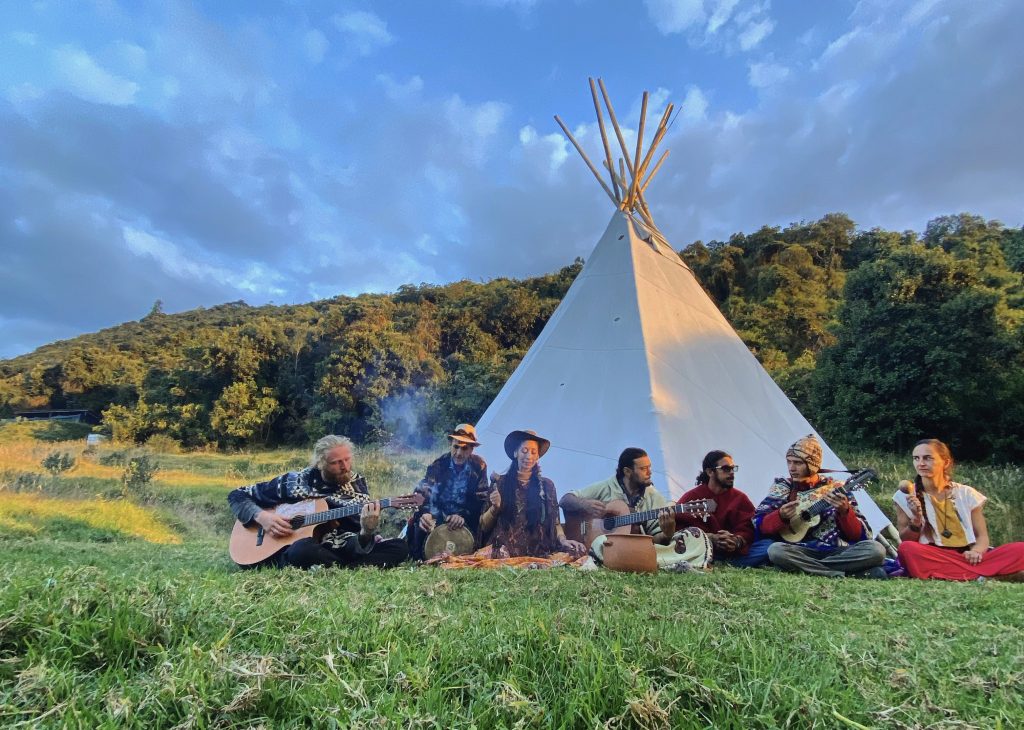
We will also be focusing on music during this March plant medicine retreat in Ecuador as a way to connect to your heart’s rhythm and the elements. There will be drum circles, song sharing, and workshops to learn more about this powerful medicine.
Celebrate March Equinox and Find Balance Within
The March Equinox is the perfect opportunity to pause and give thanks to Mother Earth; for all the ways she supports us, including through her changing seasons. Equinox is also the ideal time to pause, go inwards, and check that your inner landscape is also finding ways to maintain balance.
Connecting to the rhythm of your heart will help you find peace within the light and dark, recognizing these seasons are part of planting new seeds, healing wounds, shedding what no longer serves you, and making space for new energy and growth.
If you are wondering how to celebrate Equinox this March and connect to your heart’s rhythm, join one of our Ayllu Medicina 2024 events! We have a sweat lodge and meditation on 21st March at 4pm, then a San Pedro ceremony on 23rd March at 9.30pm (spaces are limited, please reserve your spot).
You may take several steps when preparing for your first plant medicine ceremony, including fasting, setting intentions, meditation, and a good rest. But nothing can prepare you for the role of music in your first ceremony. You quickly learn that the medicine is not only the sacred plants but there are also other crucial ingredients, including you and the music.
The various ingredients that make up your ceremony are the reasons why sitting with sacred plant medicines is an individual experience. However, there is also a collective experience when you sit in a group ceremony, with one of the biggest shared surprises being the pivotal role of music. As they say, music is medicine, which makes sense in plant medicine ceremonies. Music can also aid your journey after the ceremony, once you return to the ceremony of life. Read on to learn more about plant medicine music and how you can connect to this music.
Plant Medicine and Music: The Sacred Connection
Music is medicine in many people’s lives. You may play instruments, use music to express yourself, or listen to music regularly. And you can probably relate to how a song can instantly change your mood, help emotions flow, or raise your energy. Music’s integral role in everyday life helps explain why music is often used in plant medicine ceremonies, weaving together with the sacred plants. Music can change your consciousness, raise your vibration, and cast spells.
Common ceremonies with music include specific types of Ayahuasca ceremonies, Peyote ceremonies, and San Pedro ceremonies. Not all types of ceremonies include music; however, many indigenous cultures use music as part of ceremonies and to facilitate healing. The shaman uses music for multiple purposes, such as to greet the medicine, connect to the spirit world, and facilitate healing. The songs or instrumentals help assist a person’s journey, instantly changing the ceremonial atmosphere, providing relief, raising the psychedelic experience, or helping ground participants when the ceremony is nearing its end. There has been a lot of research on the therapeutic role of music, including the role of certain types of music in plant medicine ceremonies. Susana Bustos, Ph.D., describes Ayahuascha chants (Icaros) as ‘the musical manifestation of the spiritual essence of the natural element,’ for example.
Types of Plant Medicine Music
Plant medicine music can fall under various genres. Certain types of music are used with specific plants, whereas other sacred songs are traditional to a particular culture or can be used in multiple settings, such as songs devoted to Mother Earth. You may find music related to specific sacred plant medicines and sacred instruments. Or you may discover plant medicine music grouped under a genre, such as
Icaros (Ikaros)
Shamanism
Neo-pagan music
Folk music
Ceremonial music
Plant medicine music
These are just several of the many types of music you may hear in plant medicine ceremonies. The music you hear can depend on the plant you’re sitting with, the culture the ceremony is honoring, what is needed in the ceremony, and who is leading the ceremony. Sometimes people also share children’s or traditional songs from their own culture.
Sacred Musical Instruments
There are different sacred musical instruments used around the world in ceremonies. These are some of the instruments we use in ceremonies, including sweat lodges, San Pedro, and Ayahuasca ceremonies:
The Chakapa
The Chakapa is spelled in different ways and has different names. It is a ritual leaf rattle often used in Ayahausca ceremonies and individual healing rituals. It makes a rhythmic and healing rustling sound, aiding songs the Shaman sings. Some say they carry the wind of the forest in them due to their healing sound, which can help send people into a trance.
The Rattle
Rattles (also known by names such as ‘sonaja’ in Spanish) are used in various ceremonies. These include San Pedro ceremonies and temazcals. The person singing usually plays the rattle, holding it level with their heart, sending their prayers through song. Rattles are filled with seeds, beads, or another filling to make the sound. Different types of rattles are used in plant medicine ceremonies, such as the Chakapa and Gourd Rattle. Another example is if a woman is on her moon (menstruation time). She will be given a moon rattle, which focuses on containing energy instead of raising it.
The Drum
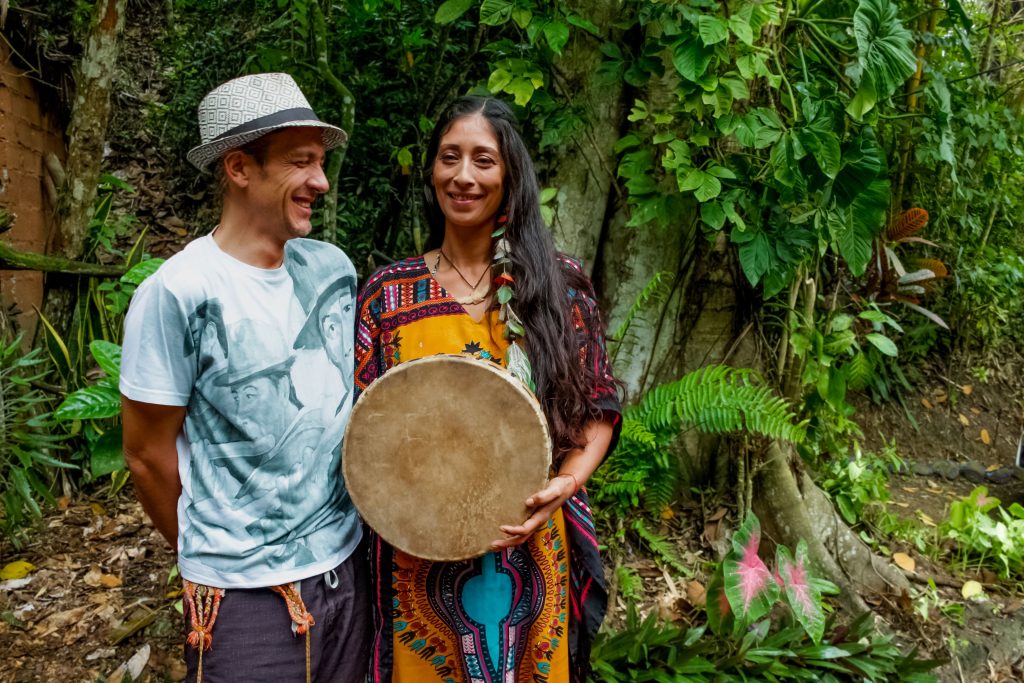
The drum (el tambor in Spanish) is used around the world, with many different types being used in plant medicine ceremonies. Often the drum is seen as the connection between heaven and earth. Drums we use in ceremonies include:
The water drum
Shamanic drum
Handpan drum
A water drum is said to represent the heart of a little boy. The combination of the drum filled with water and the leather drumhead makes a powerful drumbeat sound. The water drum is used in a variety of ceremonies, including certain Peyote ceremonies.
The shamanic drum is also known by other names, and cultures use it worldwide. Traditionally, this drum is made with animal hide, such as deer hide, but now some drums use other materials. There are also different drum-making techniques depending on the culture.
This type of drum is used in a variety of ceremonial and ritual settings. For example, it is used for shamanic drum journeys and in temazcales to accompany the singer. Playing the drum can also help you connect to your rhythm, heart, and voice.
The handpan drum is a beautiful drum that provides sound healing through its vibration. Our shaman Aimé Bertot plays a similar drum, often during Ayahuasca ceremonies, to help raise the vibration and connect you to your essence.
The Flute
There are different types of flutes, such as Ecuador’s rondador, the quena, and the Native American flute. The flute is used for rituals, energetic healing, meditation, and traditionally for courtship or communication. You can find many flute songs to learn or play some of your favorite plant medicine songs.
The Mouth Harp
The mouth harp is also known by other names, such as the jaw harp, and is a popular instrument retreat participants enjoy learning. It is an incredibly powerful instrument that can invoke spirits in plant medicine ceremonies. The origins of the mouth harp are unclear, but it is played around the world. There are different styles, such as the Vietnamese mouth harp.
Connecting to Plant Medicine Music
One of the best ways to connect to plant medicine music is to try a sacred instrument, attend a plant medicine ceremony, or a medicine music song circle. Many people begin to learn medicine music songs to share in ceremonies, too, even if they have not sung before!After all, evidence has found that singing is great medicine, with or without plant medicine. Connecting to plant medicine music can help you discover your voice and realize that everyone can sing when it is from the heart.
Tips for Connecting to Plant Medicine Music
There are several tips that can be useful to know when connecting to plant medicine music:
When possible, pass tobacco and ask for a song you hear in the ceremony or at a plant medicine retreat
Understand the lyrics of the songs you sing
Confirm whether you can sing songs in all settings
Learn one song at a time
Traditionally, you would pass tobacco to the singer of a song you hear in a ceremony to receive the song. You should still do this when possible. However, now, with the rise of the internet, you can access plant medicine music online. Connect to the original artist when possible, and support them on their platforms.
When you learn a song, understand what you are singing about and learn it well; quality over quantity! For example, if you learn Quechua medicine songs or a song with a Native American nation’s language, check the song’s meaning. Understanding the music honors its prayer and helps you sing it with intention or listen to it at the right time.
It will also ensure you sing it in the right setting and at the right time, for example, during the round of temazcal that honors that specific element. As you will experience in a ceremony, plant medicine songs can be incredibly powerful, so learning how to work with them correctly can support healing instead of hinder it.
You should only sing some songs in specific ceremonies. If you are unsure, you can check with the leader of your ceremony, as different cultures can also vary in how they carry out ceremonies and connect to plant medicine music. During Ayllu Medicina plant medicine retreats, we often hold song sharing circles, so you can learn some plant medicine songs and share some of your own music.
Plant Medicine Artists To Follow
There is a lot of ceremonial medicine music to find online, making it hard to know where to begin! Ayllu Medicina has a Medicine Music playlist you can listen to on Spotify. You can also search for specific songs, such as Shamanic songs and ritual chants, or check out these artists:
Pájaros de Luz, Hwaneetah and Aimé Bertot
Pájaros de Luz, meaning birds of light, is created by Hwaneetah and Aimé Bertot, our guides during Ayllu Medicina retreats. They have been holding ceremonies, creating plant medicine music, and playing a variety of instruments for many years. Pájaros de Luz is their first published collection of songs honoring Mother Earth and the divine light in all beings. Their second album, Sumac Wayra, is coming soon!
Their songs are a mix of original compositions and a few inspired by traditional songs. You can access their medicine song lyrics on the above link, or come to a plant medicine retreat in Ecuador and hear the music for yourself!
Santiago Andrade Leon
Santiago Andrade Leon is a spiritual leader, medicine man, and Ecuadorian Andean doctor who shares his art in different forms, including medicine music. He runs Vision Quest at Ayapuma, which Ayllu Medicina, and many of our retreat participants, attend. He also runs a vision quest in Sicily at Nina Urcu. Santiago’s music is influenced by more than 30 years on the spiritual path of Sumak Kawsay, with songs honoring different plant medicines, such as Awakolla songs and Icaros (Ayahuasca songs). His albums include:
Taita Kuraka Imbabura
Sinchi
Sumak Nina
Santiago Andrade Leon also creates music under the music channel Kurakas, which includes collaborations with other healers, including his wife, medicine woman, and spiritual leader Andrea Calderon. His music features the gourd rattle, the water drum, the guitar, and other sacred instruments that honor plant medicines, the elements, and Mother Earth. Santiago’s songs facilitate plant medicine journeys, elevate prayers and provoke healing.
Curawaka
Curawaka describes their music as ‘sacred world music,’ with members coming from around the world. Their vocalist Anna Bariyani sings in seven languages, and all members have spent years learning from indigenous cultures around the globe. They compose original songs and share versions of traditional songs they love. These include He Yamo Yo, Noku Mana, and Cuñaq, songs you often hear in plant medicine ceremonies.
Abuela Malinalli
Abuela Malinalli was the guardian and leader of the Ollintlahuimetztli Moon Dance circle in Mexico. She passed in 2020. Her music includes many popular plant medicine songs, such as ‘Abuelito Fuego,’ ‘Mira Quien Viene,’ ‘Caminaré,’ and ‘Porque Te Quiero Tanto.’
Starling Arrow
Starling Arrow is a project by artists who also produce their own work; Leah Song and Chloe Smith of Rising Appalachia, Tina Malia, Ayla Nereo, and Marya Stark. You can also check out their individual music. They are a folk group from the United States and Costa Rica.
Shipibo Shamans
The Shipibo people are from the Amazon rainforest in Peru. Their shamans sing Icaros, traditional indigenous Amazonian songs that are medicine music in Ayahuasca ceremonies.. These Ayahuasca medicine songs guide the journey, aid healing, and can send participants into trance-like states.You can listen to some of these Icaros online on the albums Woven Songs of the Amazon, parts one and two. You can also search for more Ayahuasca songs (icaros) by searching for Ayahuasca ceremony music.
Louie Gonnie
Louie Gonnie is a singer-songwriter of the Navajo people. He learned many Peyote songs from his grandfather, medicine man Haastiin Gonnie, and has been singing since the age of 5. He began composing his songs, inspired by his experiences with the Native American Church and sometimes accompanied by other Diné singers, such as Branson Gorman.
The Power of Plant Medicine Music
Attending plant medicine ceremonies helps you understand that everything can be medicine. Ceremonies include multiple ingredients that impact your journey, with one of the main ones being the music.If you get the opportunity to attend a plant medicine ceremony, live medicine music circle, or a plant medicine retreat, you will get to experience this for yourself. However, listening to the list of plant medicine artists, including our guides, Pájaros de Luz, is a good start.
Delving deeper into the genre will also be medicine for you. Music is at the heart of Ayllu Medicina’s transformational plant medicine retreats in Ecuador. We hold song circles, share instruments, and include music in all our ceremonies.If you’re interested in attending one of our retreats or ceremonies, contact us to learn more! Our March retreat will have an emphasis on medicine music.
Humans have been connecting with plant medicines such as Ayahuasca for thousands of years. Now, there are different ways to meet the sacred plants, from attending plant medicine ceremonies to taking a pause and going on a retreat. But what happens on a plant medicine retreat?
There are many different spiritual and wellness retreats out there, including yoga, meditation, and plant medicine retreats. This means that while ‘to retreat’ is to go inwards, there is no one answer to what happens on a retreat. However, here are some things that Ayllu Medicina’s transformational plant medicine retreats include.
Ayahuasca Ceremonies
One of the reasons people attend a plant medicine retreat in South America is to connect with Grandma Ayahuasca, a sacred plant medicine from the Amazon that can provide healing in various ways.
One piece of advice when meeting with plant medicines such as Ayahuasca is to avoid having any expectations! Even if you have watched countless documentaries or have heard a book’s worth of stories, it is best to go in with an open mind. Every plant medicine ceremony can be different, depending on what you need to work on to return to your center.
Ayllu Medicina retreats include one or two Ayahuasca ceremonies, depending on the retreat. These Ayahuasca ceremonies are at night.
We will meet before we sit with Grandma Ayahuasca so our guides, Aime and Hwaneetah, can give more details about the ceremony and the medicine. There is also a plant medicine dieta to follow before and during the retreat, along with other preparatory steps that you will discuss with our team when you sign up for a retreat.
San Pedro Ceremonies
A plant medicine retreat with Ayllu Medicina also includes a meeting with Grandfather San Pedro, also known as Awakolla or Huachuma. The San Pedro ceremony happens after you meet with Grandma Ayahuasca. We hold different San Pedro ceremonies depending on the retreat, such as a medicine sweat lodge, a power walk, or a night ceremony.
Similar to wise grandparents, Grandfather San Pedro and Grandma Ayahuasca complement each other well. However, the two medicines native to Ecuador work in different ways to help you realign and return to your heart.
The plant medicine dieta you will be following also helps the integration of Grandfather San Pedro. Usually, you fast for at least several hours before meeting with plant medicines such as San Pedro and Ayahuasca. The meals we provide you throughout the week will ensure you are well-nourished and ready for these ceremonies.
Temazcals (Sweat Lodges)
An integral part of Ayllu Medicina plant medicine retreats are our temazcals, also known as sweat lodges. Temazcal originates from the Nahuatl word Temāzcalli, which has several different translations, including ‘house of heat.’ Temazcals are a powerful medicine that humans have used for cleansing the body, mind, and spirit since the time of Mesoamerica.
Temazcals provide an opportunity to return to the womb of Mother Earth and shed what you no longer need. Our volcanic grandmother stones are heated in the fire and are placed in the womb, the sweat lodge, with us, Mother Earth’s children, ready for rebirth. Different incenses are placed on the stones before the door closes, darkness descends, and the heat begins to rise as water is poured over the stones.
We have multiple temazcals throughout plant medicine retreats, which help integrate ceremonies, detoxify, purify, and help you let go of what no longer serves you. Sweat lodges vary in length and are done in different ways depending on where you attend a temazcal ceremony.
Sharing Circles and Support
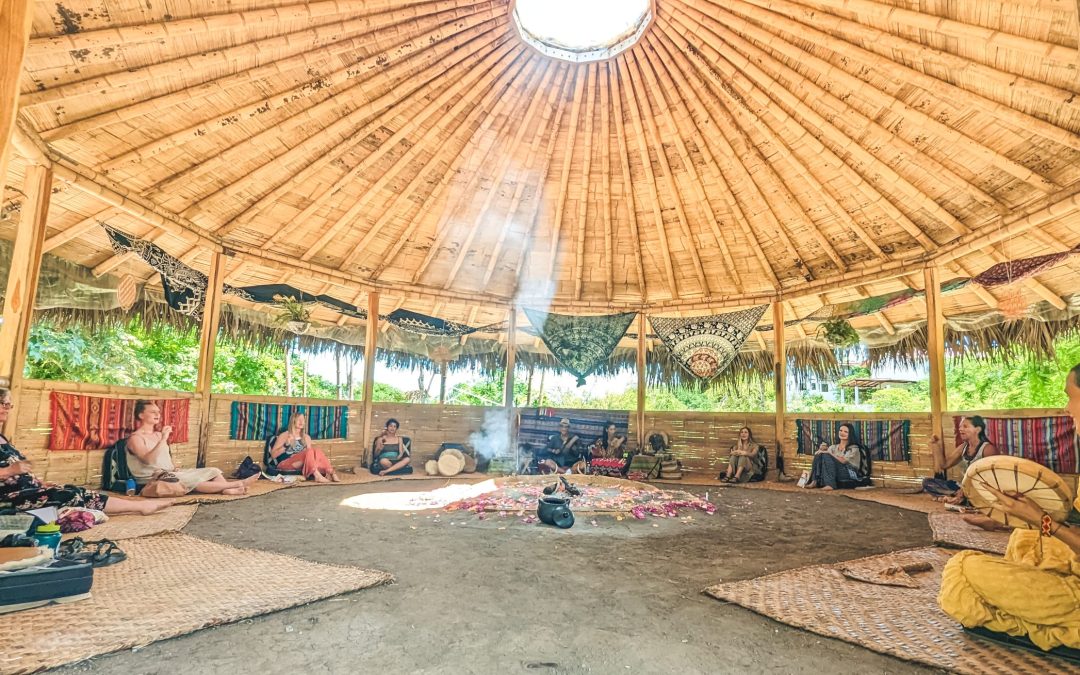
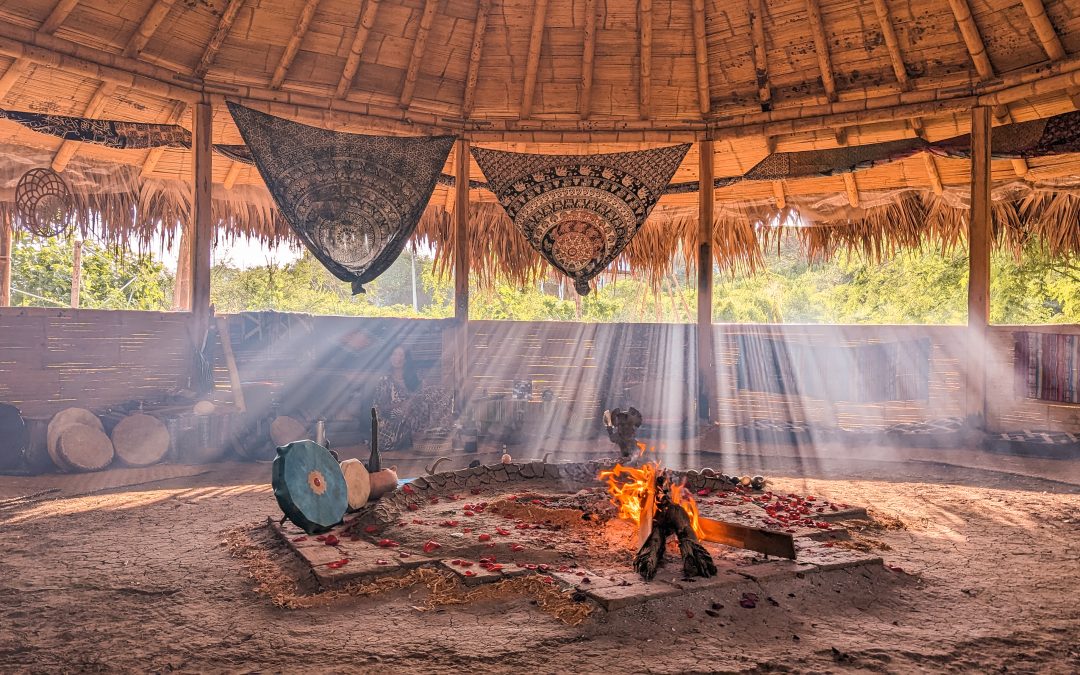
The day after our plant medicine ceremonies, we gather around the fire in our retreat container for a sharing circle. It is optional as to what you share, though we suggest sharing the ‘pearls’ of your experience. These sharing circles also give you the opportunity to connect with medicines such as Rapéh.
It can take time to integrate what comes up in the ceremony, which is why it is important to also keep some of your experience for yourself. You will have plenty of rest time to journal, meditate, and integrate your experiences during retreats. Our Ayllu Medicina team will also be around if you have any questions or need support.
Rest and Time in Nature
It is called a ‘retreat’ for a reason, which is why what happens on a plant medicine retreat also involves stopping. To retreat is an opportunity to break your usual routine and take the time to look within without your everyday commitments or distractions. You will have plenty of space and downtime to be.
You can watch the many birds around the retreat center or spend time by the river. Some retreats also include a beach visit or a medicine power walk, where we often spot monkeys, butterflies, and other wildlife. The retreat center is tucked away in a tropical oasis and also close to the ocean, so before or after the retreat, you can take a trip to Ecuador’s coastline.
Workshops
Our plant medicine retreats also include workshops, such as Moon Wisdom with Hwaneetah and song circles. You have the opportunity to connect to the powerful medicine of the womb, with these workshops offering invaluable wisdom for men and women. You can check our retreat schedule for specific workshop details.
As our shaman Aime says;
❝To sing is to pray twice.❞
Music is an integral part of our retreats and ceremonies. You will also have time to connect to sacred instruments, such as the hand drum, rattle, and mouth harp. You will also have the opportunity to learn medicine songs, such as those from Pajaros De Luz.
Yoga and Meditation
Yoga is an integral part of our retreats, which helps provide grounding, peace, and alignment of your energy.
As our guide Hwanteetah says;
❝Medicine and meditation are derived from the same root word. Meditation is also medicine. Through meditation, you come to know your true self. Through a plant medicine ceremony, you experience your true self through meditation.❞
Experienced yoga teachers will guide you through the retreat week and provide tools you can also use when you return home. Ayllu Medicina’s yoga includes breathwork, movement practice, and meditation techniques suitable for all levels. We also work with yoga teachers who host retreats, such as Breathe and Flow.
Inner Work
You will have the opportunity to connect with different plant medicines, gain a new community, and learn about other sacred traditions of South America. But a lot of what happens on a plant medicine retreat depends on you. The inner work is one of the most important parts of what happens on a plant medicine retreat.
The retreat container allows you to catch up with yourself and take a good look inside to remember who you are. By working on your inner world, your external world also begins to change. What comes up will be personal to your journey, but our retreats are designed to help support and guide you through the process back to your heart.
Learn What Happens on a Plant Medicine Retreat
A lot of what happens on a plant medicine retreat is deeply personal, which is why it is best to have no expectations. However, take the time to find a retreat program that sparks your interest and honors the sacred traditions it shares. San Pedro and Ayahuasca retreats have different schedules, so this post is specific to Ayllu Medicina’s transformational plant medicine retreats.
If you feel a call to connect with sacred plant medicines and experience what happens on a plant medicine retreat, it is time to take the next step; connect with us! We are happy to answer any questions you may have.
It is a time that is a source of excitement for some and avoidance for others. Once the countdown ends and the new year begins, now what? If you’re wondering how to start the new year, then consider attending a plant medicine retreat in Ecuador.
January is often filled with talk of resolutions and new year reset plans. But beyond that, it is an opportunity for reflection and change, which makes it the perfect time to attend a retreat. Read on to learn more about why you should start the year with a detox retreat.
Detox
A common New Year’s resolution is a detox in January. When we talk about a New Year detox, we are referring to your body, mind, and spirit. After all, it is not just your body that accumulates impressions, but your mind and spirit too. Our January retreat will provide tools to help you reset for the year ahead, such as yoga and meditation.
Plus, before and during a retreat, you will be on a plant medicine dieta, which is a simple but delicious food plan to support the integration of the plant medicines Ayahuasca and San Pedro safely. The dieta also helps cleanse and protect your energy, including recommendations such as avoiding phone and social media use.
You begin to realize in ceremonies how everything makes an impression on you, so simplifying everything can bring clarity, purification, and connection a lot faster. Our January retreat will also include specific foods and drinks tailored to enhance this detoxification process.
Renewal and Renovate
Attending a plant medicine retreat is a transformational experience that helps you get closer to your true nature. But it is not about creating a ‘new’ you; it is about remembering, returning to yourself, and reconnecting to the whole.
You renew your focus, energy, and sense of self during the retreat, realigning and coming into balance once more. The inner work begins to reflect on your outer space, too, so you can return home with a renewed perspective on your life. You may also notice how your healing and renewal begin to benefit those around you.
Plus, especially in the Northern Hemisphere, January can feel more like hibernation time than renewal. Attending a plant medicine retreat in Ecuador will mean you also get to experience the coast during the high season, which usually means sunny days and beautiful sunsets.
Close Cycles and Make Space
Named after the Roman God Janus, God of new beginnings and endings, January is when many people reflect on everything that has passed and what they want to change. But it can be challenging to start your new year right without direction or a new environment.
Our plant medicine retreat in Ecuador gives you the space to let go of what doesn’t serve you anymore and make room for the year ahead. All the activities are tailored to help you with this. For example, there are several sweat lodges (temazcals) throughout the week, which are a chance for purification and rebirth, the perfect new year reset.
You will also get the opportunity to learn ways to close cycles throughout the year, such as with our moon wisdom workshops. After all, 365 days is a long time, so learning ways to close cycles throughout the year is invaluable.
Set Intentions
At Ayllu Medicina, we have the main intention of peace, love, dignity, and joy. You will also have the opportunity to set your own intention for the week and learn more about how you can integrate intentions into your life.
Giving yourself the time to go inwards opens space for what your heart truly wants. During plant medicine ceremonies, such as with Grandmother Ayahuasca, you will move from your head to your heart, so your intentions may simplify or change. With these intentions in mind, you can then direct your arrows for the year ahead and your life.
As our guide Hwaneetah says;
❝To find our purpose in life without finding our true selves first can be very challenging, almost impossible. When you find yourself, you automatically find your purpose.❞
Reflect and Give Thanks
The new year is the perfect time to pause, give thanks for everything that has passed, and be ready to receive what is to come. What better way to do this than at a new year’s retreat, in a tropical oasis without distractions?
Plant medicine retreats offer you the space to pause, let yourself catch up, and be present. You have the time to reflect on your year and everything that has passed without rushing, avoiding, or leaving anything for later. All the activities will aid this reflection and integration, including the plant medicine ceremonies, temazcals, yoga, and art time.
Gain a New Community
One of the benefits of attending a San Pedro and Ayahuasca retreat in Ecuador is the retreat container and the community you gain. You are in a supportive space catered to help you process, heal, and integrate, even once you leave the space.
Many retreat attendees stay in touch, share their adventures, and ask questions that come up once they return home. Some even return one, two, or multiple times for another one of our plant medicine retreats!
So, if you are wondering how to start your new year, start by gaining a new community. ‘Ayllu’ is Kichwa for family, and everyone who attends sweat lodges, plant medicine ceremonies, and retreats with us becomes part of our supportive Ayllu community.
Learn New Wellbeing Tools
Around 64% of people abandon their New Year’s resolutions within a month. There are many reasons for this, including not having the tools to implement lasting change. At our detox retreat, you will have the time to pause, return to your center, and gain tools to help you continue your journey.
You will start the year with a detox retreat, but you can use what you learn throughout the year. Tools include meditation techniques, yoga, breathwork, moon wisdom, and healthy eating. This way, you can learn how to maintain alignment and wellbeing, even when you return home.
Why You Should Start the Year With a Detox Retreat
There are many reasons why you should start the year with a detox retreat. You may be interested in connecting to plant medicines, feel stuck as this year comes to a close, or want to start the new year intentionally. Whatever the reason, if you feel the call, then it is time to consider a plant medicine retreat.
We have an Ayllu Transformational Plant Medicine Retreat in January 2023, focused on detox and renewal. Here is the link for the details. It will include two Ayahuasca ceremonies, a San Pedro ceremony, temazcals, and other tools to help you start your year in your heart’s center. We also have plant medicine retreats in April, May, and June.
Feel free to contact us if you have any questions!